

Unusually low water levels on the Danube, meetings with local authorities, an eight-year-old cyclist, homemade banitsa and hundreds of kilometres through some of Bulgaria's most beautiful landscapes. For the third year running, the international COP Bike Ride relay crossed Bulgaria — this time following two routes, with more than 80 local cyclists taking part and support from organisations across the country.
Two Branches, Many Stories
In late September, two groups of cyclists set off on different routes across Bulgaria.
One started in Sofia, crossed the Sredna Gora mountains and the Thracian Plain, then continued through Sliven towards Burgas. The other arrived from Romania, crossed the Danube at Silistra and headed through Dobrudzha, Varna and down the Black Sea coast towards Burgas and the Strandzha mountains.
Both were part of COP31 Bike Ride, the international cycling relay connecting the COP30 climate conference in Belém, Brazil, with COP31 in Antalya, Türkiye.
Ahead of us were days of cycling, meetings with local cycling communities, discussions with municipal authorities and quite a few surprises.
Some were welcome. Others had us checking the Danube's water level almost as often as the weather forecast.
But before any of that, there was a journey to organise.
The Adventure Begins Long Before the First Kilometre
Organising an international cycling relay involved more than drawing a route on a map.
For months, we had been coordinating plans with the international COP Bike Ride team, finding local partners, planning events and arranging meetings with local authorities in Sofia, Plovdiv, Varna and Burgas.
We wanted the journey to be more than an opportunity to show our international guests around Bulgaria. It was also a chance to talk about the challenges people face when cycling in their everyday lives.
After all, there's still a big difference between enjoying a Sunday bike ride and being able to cycle safely to school or work.
That difference would come up again and again throughout our journey.
From Sofia to Sredna Gora: Branch 8 Sets Off
A few days before departure, we organised the Bulgarian premiere of the documentary about the COP30 Bike Ride - TOGETHER.
Svetoslav from COP Bike Ride Bulgaria introduced the COP Bike Ride initiative, while Ivo from VeloEvolution spoke about Sofia's cycling infrastructure and the problems that still make everyday cycling difficult.
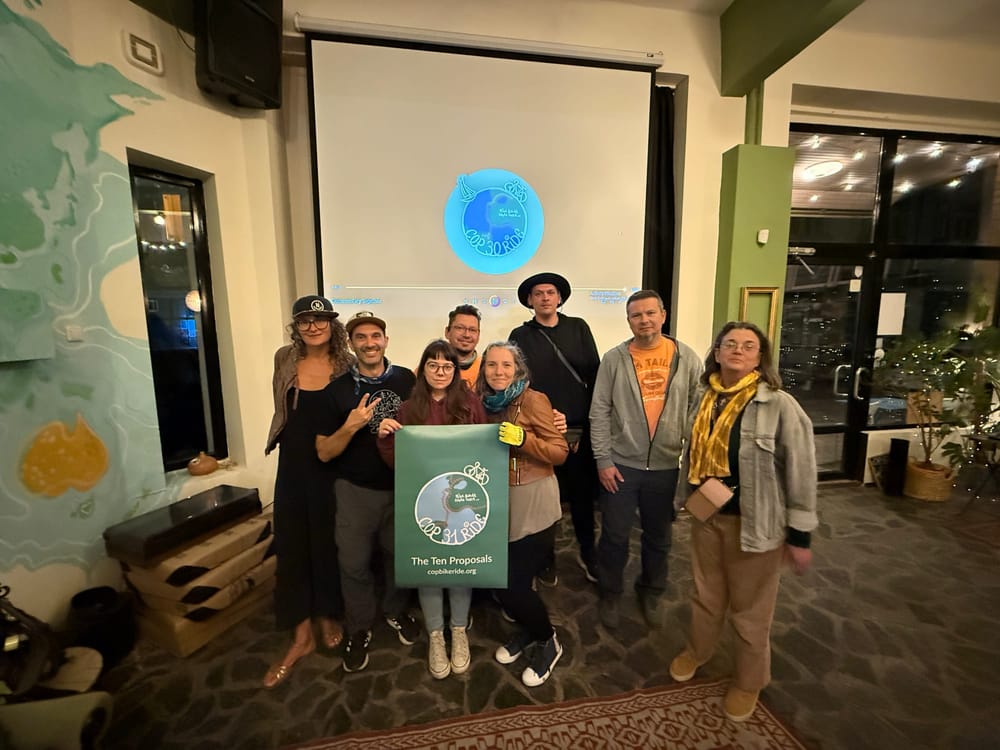
Traveller's Club, Sofia — 24 September 2026
The conversations after the screening made one thing clear: there is plenty of interest in riding a bicycle as a means of transport, and no shortage of people willing to work for change.
What is still missing is a sufficiently connected and safe cycling network.
As part of the ride, we had asked to meet the Mayor of Sofia on 25 September. We wanted to talk about cycling in the capital and what the COP31 ride stands for. The mayor had other priorities, and the meeting didn’t happen. Honestly, we weren’t surprised. Not long before, a joint campaign by the Sofia police and the municipality had told cyclists they would be fined for riding in the city’s parks. The announcement caused widespread anger.
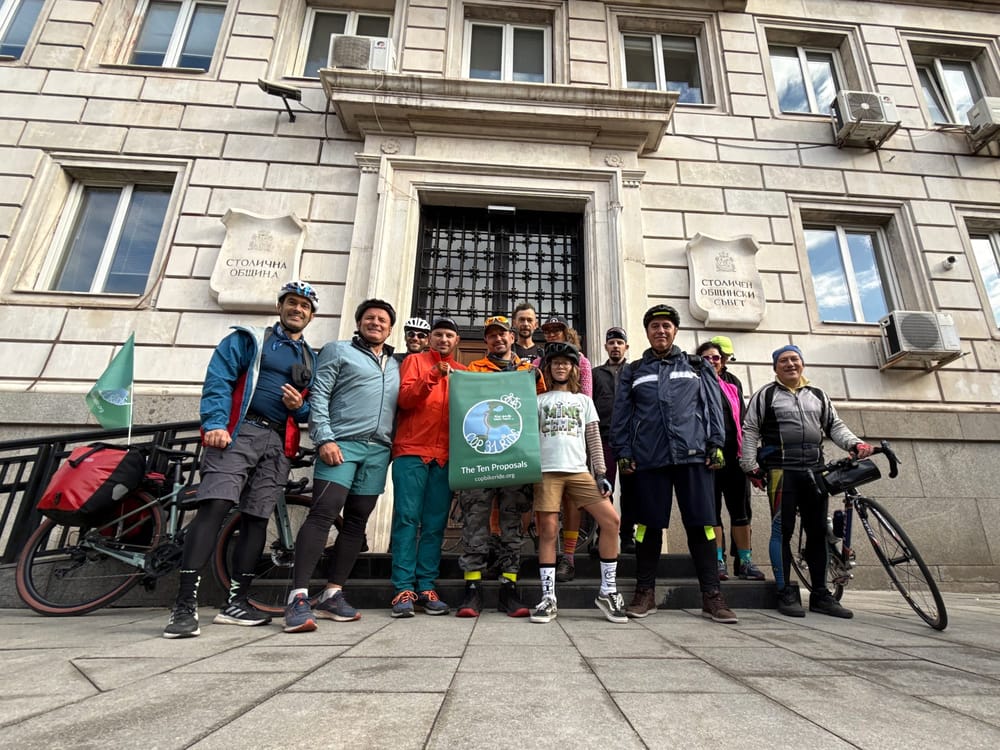
Sofia Municipality — 27 September 2026
The following morning, we left Sofia and embarked on our journey through Bulgaria.
Our route took us through Smolsko and Smilets to Panagyurishte, a town with a special place in Bulgarian history, known for its role in the April Uprising of 1876 and the remarkable Panagyurishte Gold Treasure.
From there, we continued across the hills of Sredna Gora towards Plovdiv.
Plovdiv: From the Meeting Room to the Streets
In Plovdiv, the local cycling organisation VeloKultura had put together a programme combining official meetings, a group ride and plenty of opportunities for conversation.
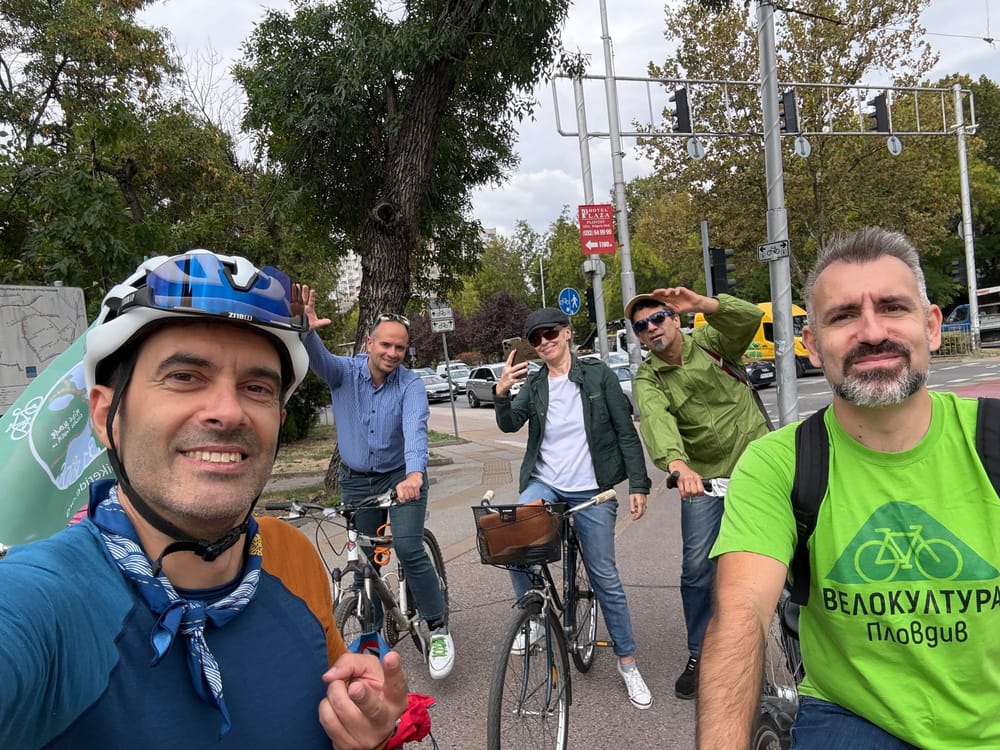
Plovdiv — 29 September 2026
We began at Plovdiv Municipality, where we spent an hour talking with three deputy mayors: Nikolay Dushkov, responsible for transport; engineer Haki Sakabov, responsible for construction, investment, municipal property and the economy; and Plamen Panov, responsible for culture, archaeology and tourism.
We discussed cycling infrastructure, road safety and ways to make cycling a practical option for more daily journeys.
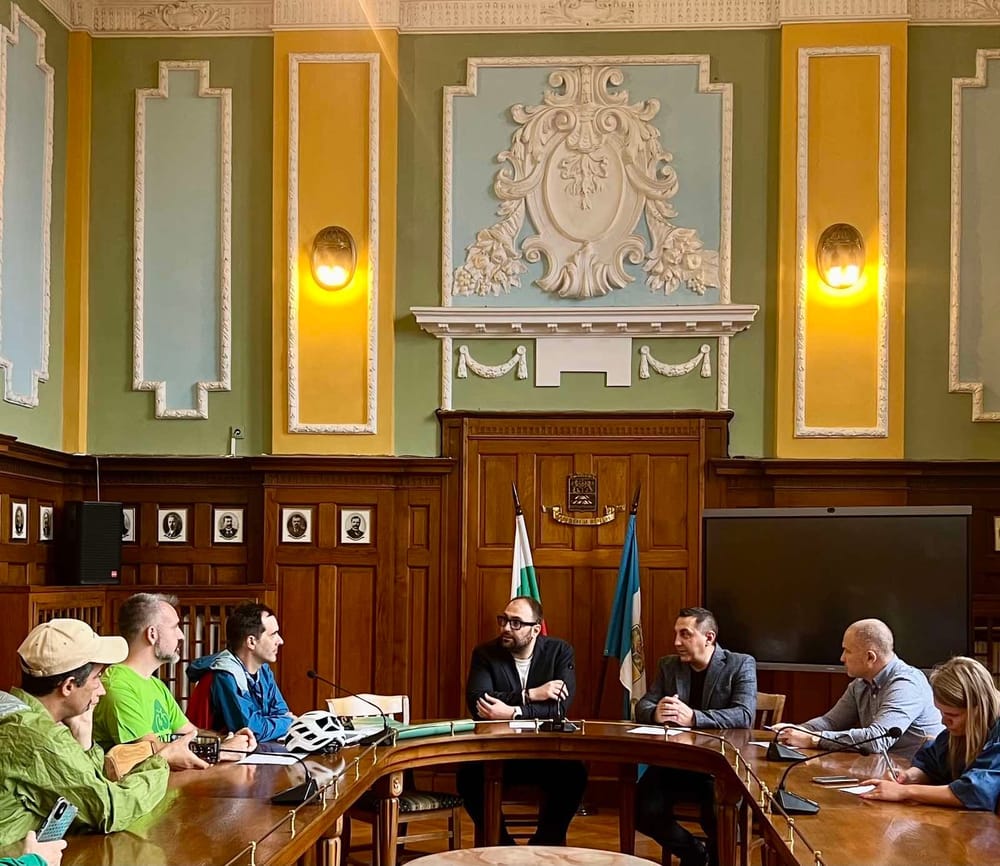
Plovdiv Municipality — 29 September 2026
After the productive discussion with the city officials, we got back on our bikes and joined local cyclists for an evening ride through the city. The ride finished at BeeBop Cafe for a screening of TOGETHER, a presentation and more conversations.
This time, over a beer.
Official meetings matter, of course. But evenings like this often tell you much more about the people behind local cycling initiatives.
Asenovgrad and Stara Zagora: What Do Local Cyclists Need?
In Asenovgrad, we were welcomed by Veselin from the local cycling group Asenovgradski Bairi.
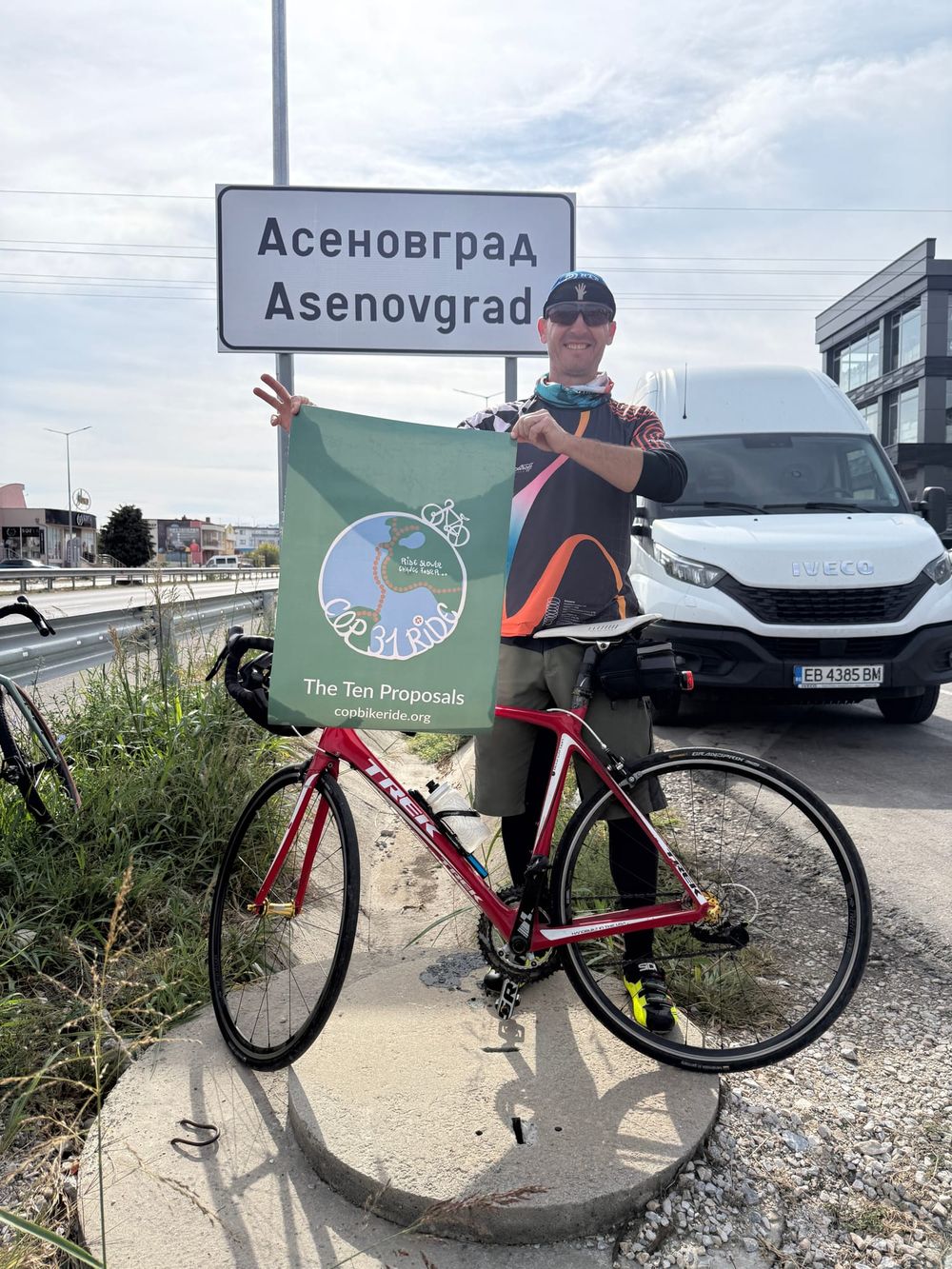
Asenovgrad — 30 September 2026
Our conversation quickly turned to practical needs: cycle routes connecting schools, parks, workplaces and the railway station; more bicycle parking; and a public pump track.
One of the group's main goals is a safe cycling connection between Asenovgrad and Plovdiv.
The following day, in Stara Zagora, we met Konstantin from Beroe Cycling Club.
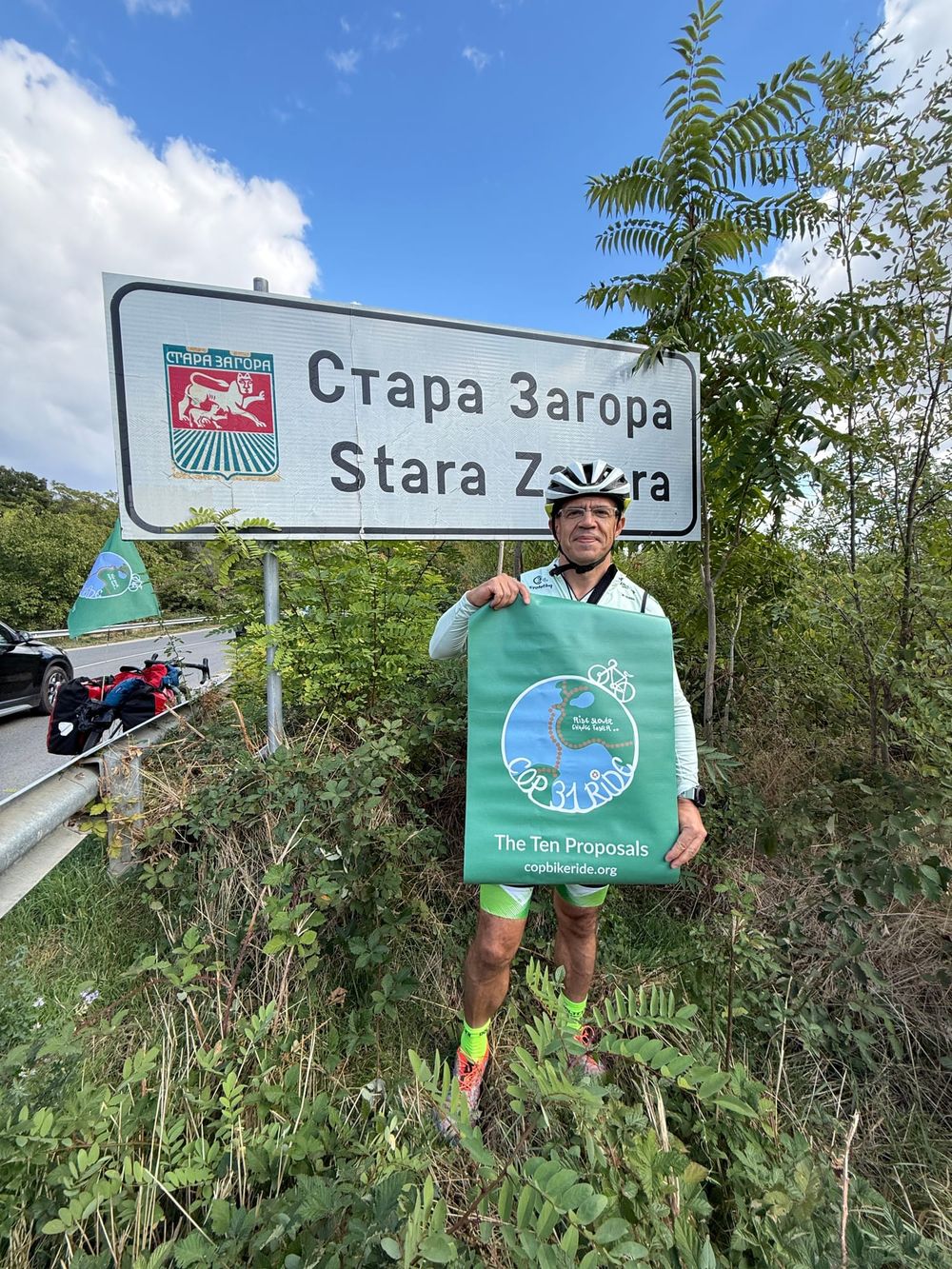
Stara Zagora — 1 October 2026
He described the city's limited and disconnected cycle lanes, the need for better maintenance and the lack of safe routes to residential neighbourhoods, the university and nearby settlements.
In his view, Stara Zagora needs three to four times as many cycle lanes as it currently has.
We heard similar concerns in different towns and cities, but also plenty of concrete ideas for addressing them.
That was one of the most valuable parts of the journey: seeing what everyday cycling looks like through the eyes of the people who actually do it.
Meanwhile, on the Danube: Will the Ferry Run?
While Branch 8 was making its way across southern Bulgaria, the main international route, Branch 1, was approaching the Bulgarian border from Romania.
The plan seemed straightforward. The cyclists would take the ferry from Călărași to Silistra, cross the Danube and continue through Dobrudzha towards the Black Sea.
But the river had other ideas.
A prolonged drought had left the Danube at the point of crossing at an unusually low level, raising concerns that the ferry service might be suspended.
For an international cycling relay, with each stage linked to meetings and events arranged well in advance, an unexpected change like this is a serious concern as we could miss the opportunity to meet with local authorities and decision makers.
We kept a close eye on the situation right up to the last moment.
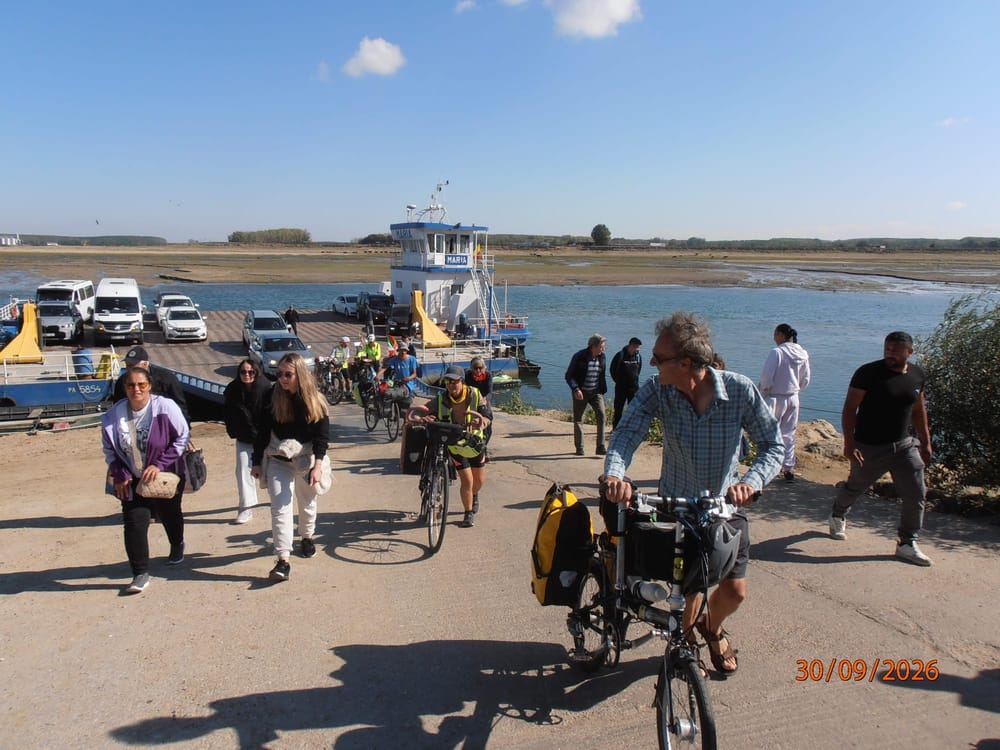
Călărași–Silistra ferry crossing. Welcoming the international COP31 Bike Ride participants on the main Belém–Antalya route — 30 September 2026
Fortunately, the ferry was running, and the international group made it safely to Silistra.
The low water level was a striking reminder of how vulnerable transport and infrastructure can be to prolonged droughts — an issue closely connected to climate change and the need to adapt to its effects.
Through Dobrudzha to the Black Sea
After crossing the Danube, the international group continued through Dobrudzha.
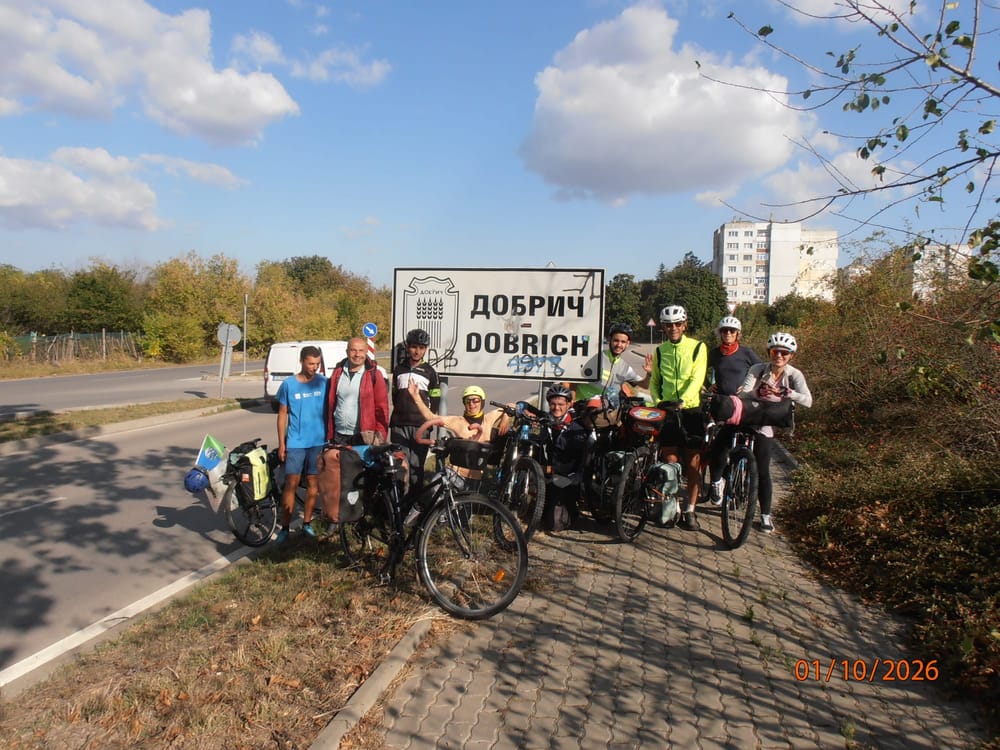 Dobrich — 1 October 2026
The group's arrival in Dobrich also attracted local media attention.
From there, the journey continued towards Varna and south along the Black Sea coast.
In Varna, COP31 Bike Ride we met Deputy Mayor Nadezhda Bobcheva to discuss cycling infrastructure and road safety. The Deputy Mayor shared that Varna Municipality has committed to gradually developing a comprehensive, connected cycling network by 2030, improving safety and encouraging more people to use bicycles for everyday journeys.
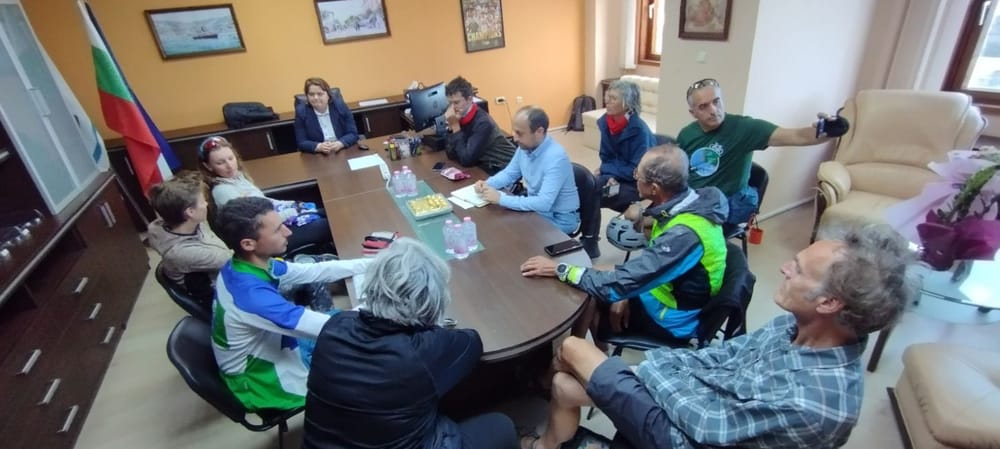
Varna Municipality — 2 October 2026
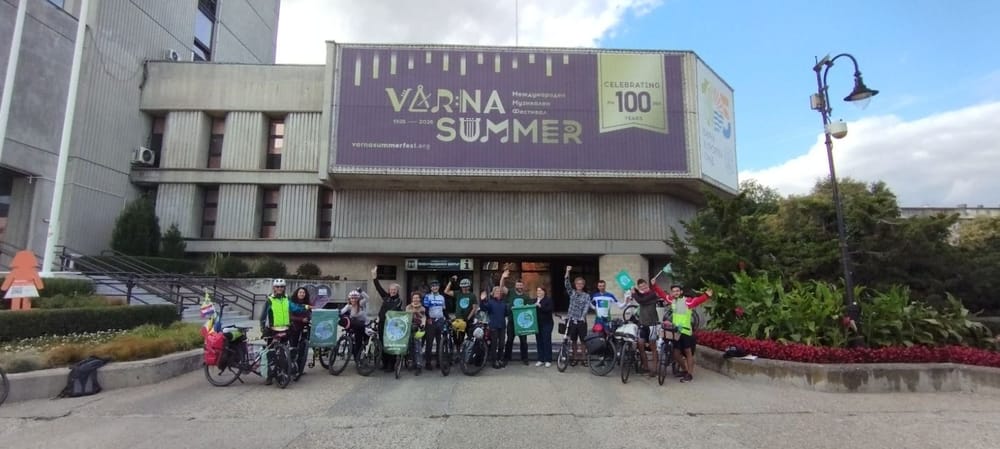
Varna — 2 October 2026
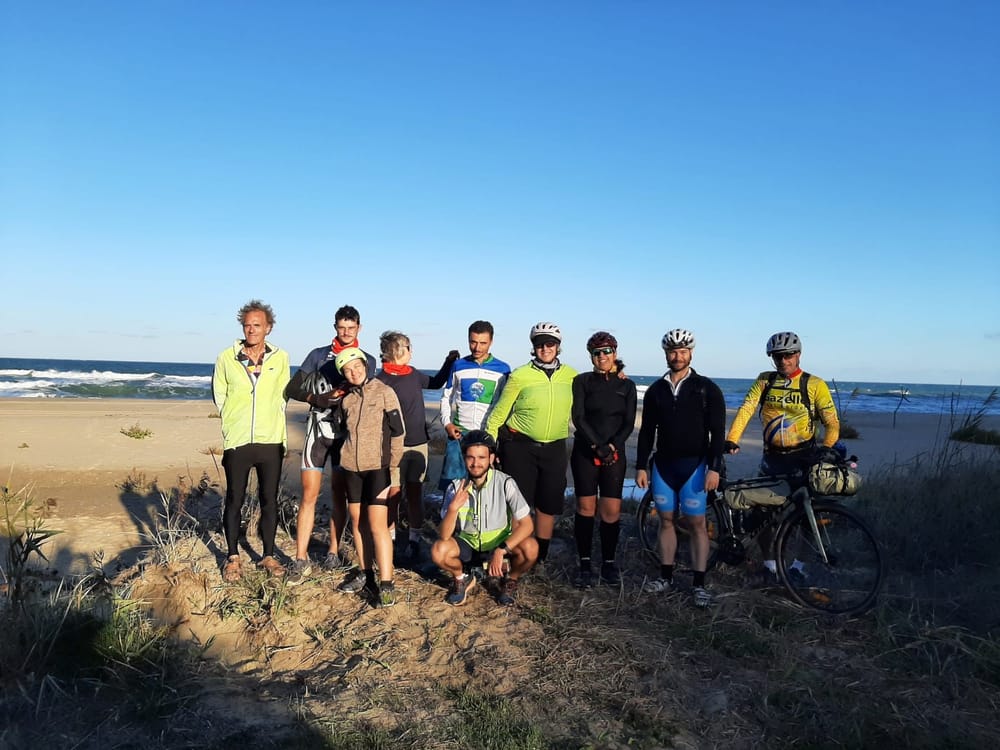
On the Black Sea coast
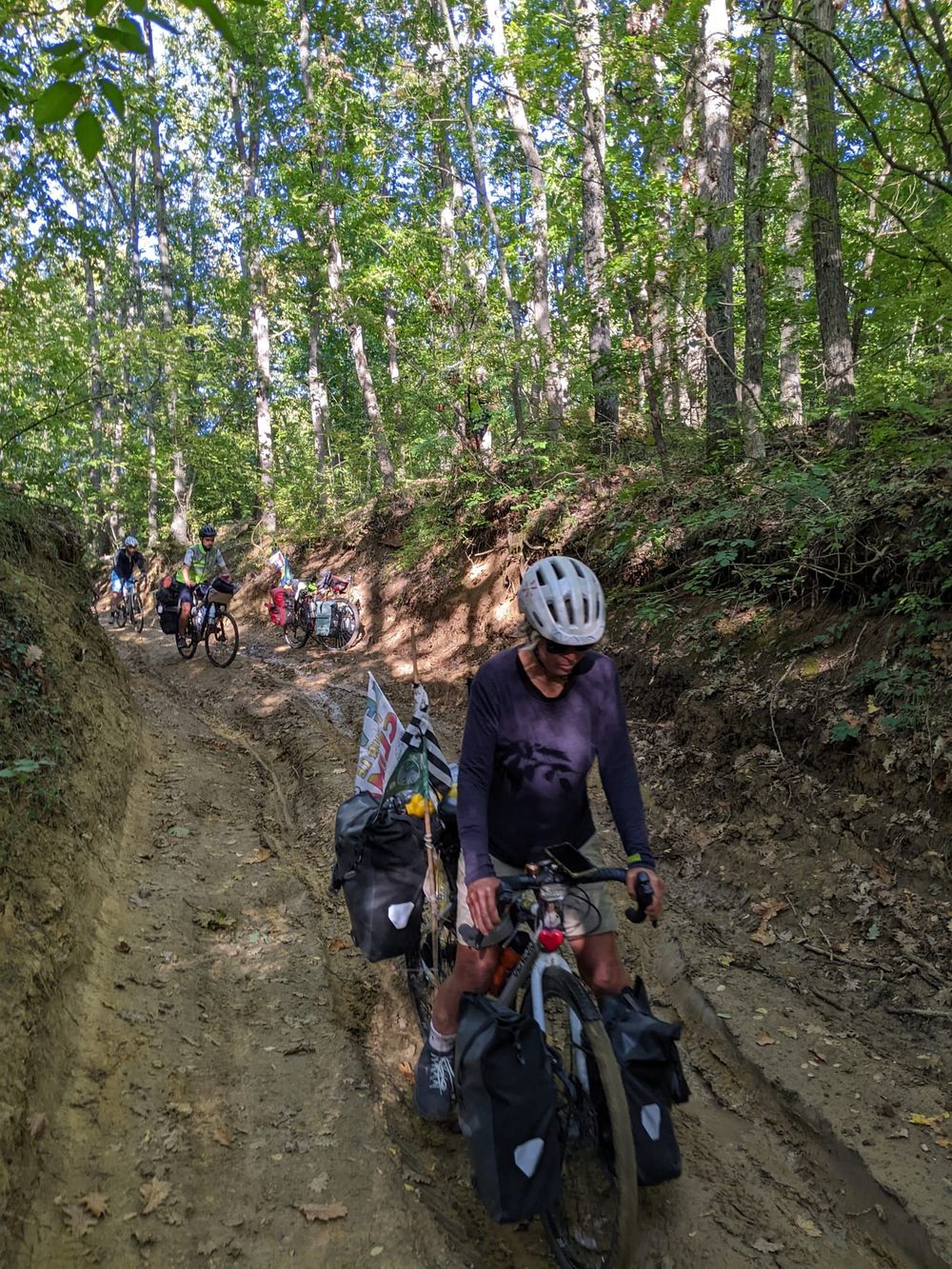
Crossing the eastern Balkan Mountains
The two branches passed through different parts of Bulgaria, but both relied on the help of local cyclists, organisations and friends of the initiative.
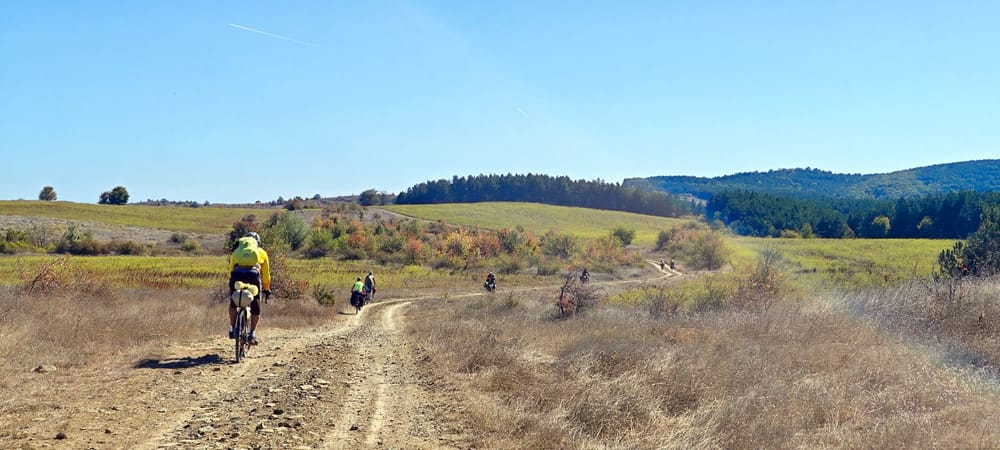
It was this network of people that made it possible to organise so many meetings and events in such a short time.
Sliven: One of Our Youngest Riders and a Warm Welcome
Sliven greeted us with a wonderful turnout and plenty of enthusiasm.
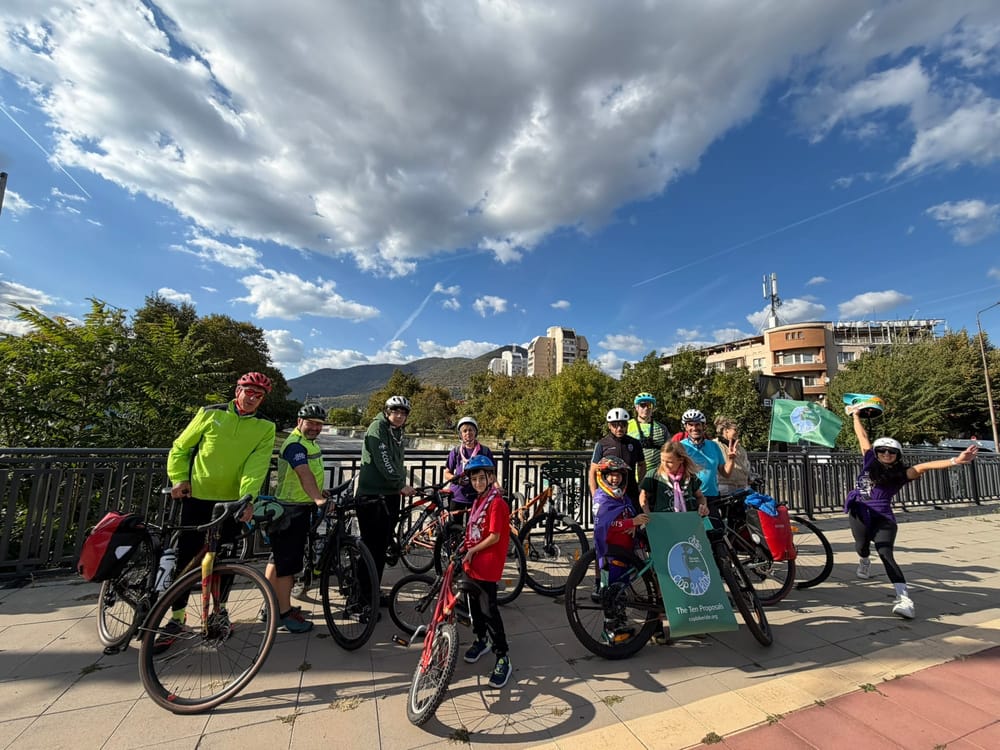
Sliven — 2 October 2026
Local cyclists joined the relay, alongside representatives of Ti Si Sliven, the Bora Scout Club, Rotary Club Sliven and Champion Racing Team.
Among them was eight-year-old Deo, one of the youngest relay riders on the Bulgarian route.
That evening, we took part in KinOspektivi, where the conversation once again turned to the future of cycling.
Among the main topics in Sliven were safe cycle routes to schools, connections to nearby settlements and the Sliven Mineral Baths, and opportunities to develop cycling routes in the Sinite Kamani Natural Park.
After the discussion, we screened TOGETHER and shared stories from the road.
Burgas: Bikes, Meetings and A Cloud Embraced
Burgas was one of the key stops on the Bulgarian route and the place where the two branches came together.
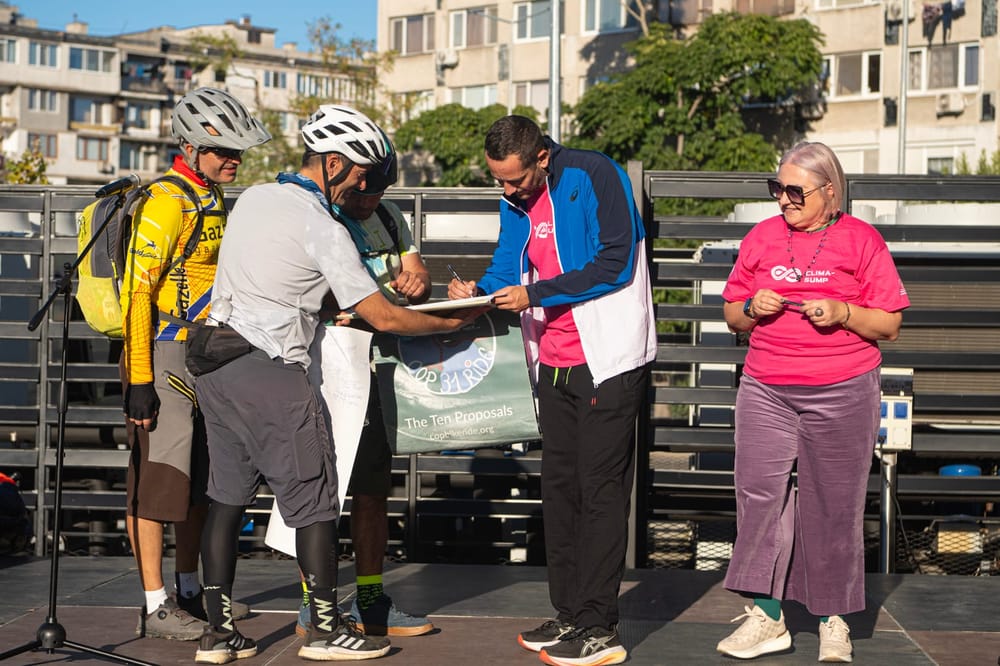
Burgas — 4 October 2026
Deputy Mayors Vesna Baltina, responsible for strategic development, ecology and climate change adaptation, and Manol Todorov, responsible for sport and tourism, added their signatures to the international COP Bike Ride banner.
For the second year in a row, Burgas Municipality signed a letter of commitment, including pledges to provide more space for safe cycling, convenient bicycle parking and an annual cycling event for people of all ages.
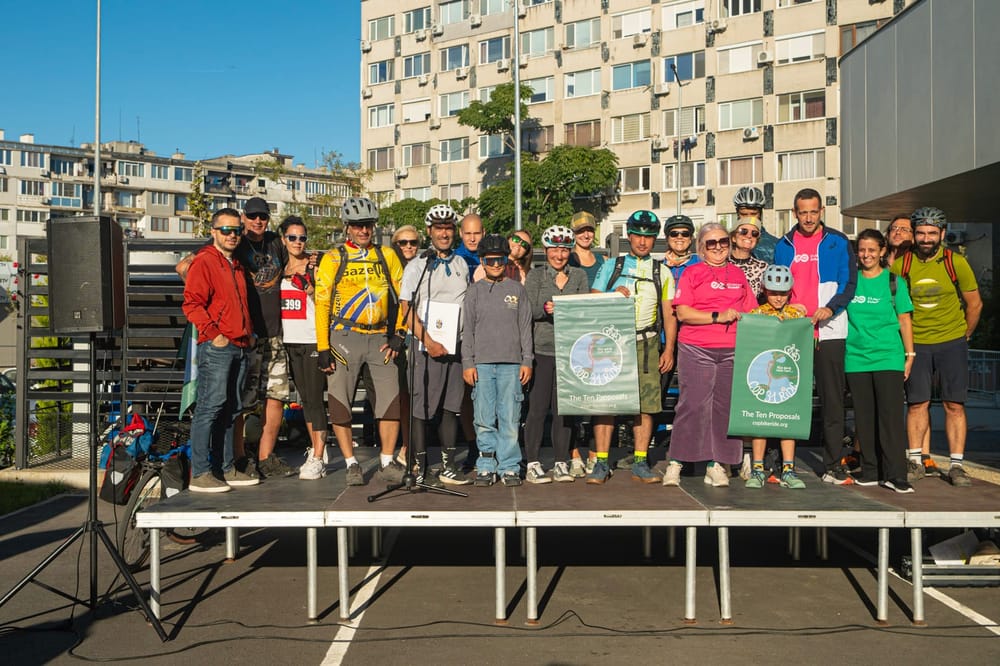
Burgas has ambitions to host major international events, including international cycling events. Our meeting with the municipality was also an opportunity to draw attention to everyday cycling and the importance of safe, connected routes across the city.
After the official meetings, the programme took a more relaxed turn.
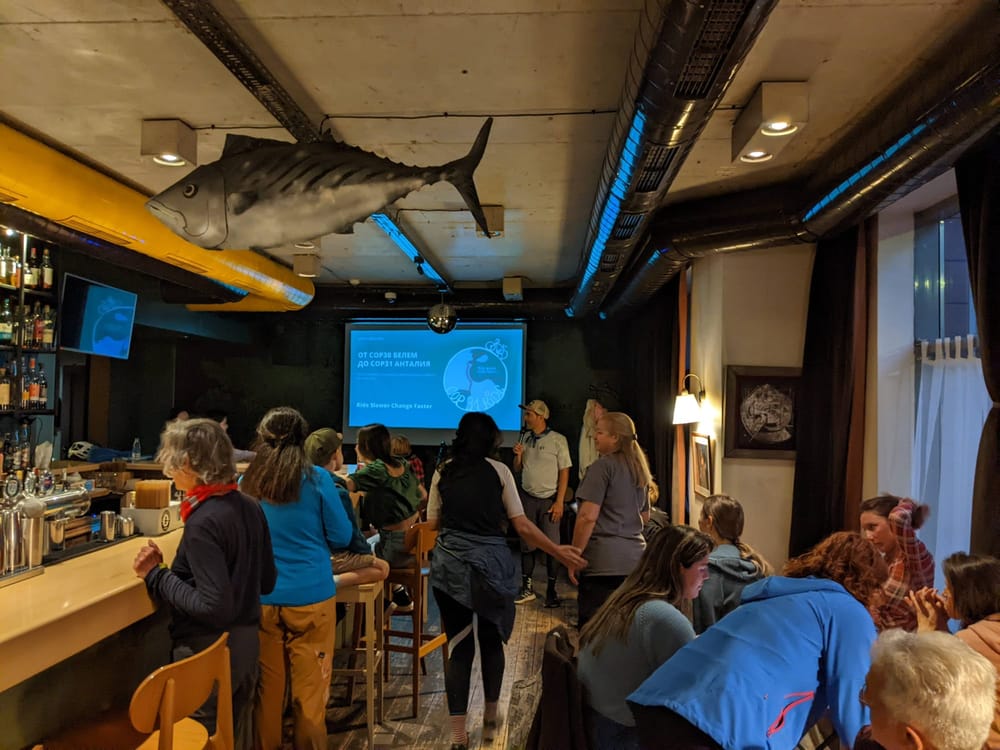
At Barbossa, we talked about COP31 Bike Ride, discussed cycling as an everyday means of transport and watched TOGETHER.
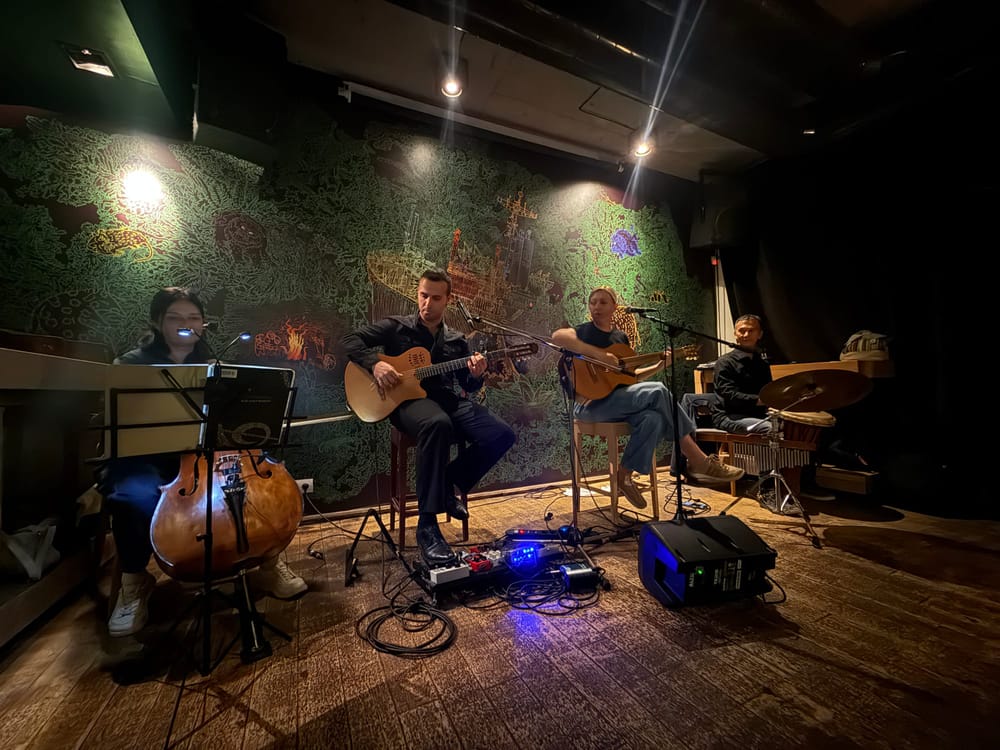
The evening ended with a performance by the music project A Cloud Embraced.
Following Birds, Thracians and Ancient Forests
After Burgas, the route continued south through some of the most interesting natural and historical sites along Bulgaria's Black Sea coast.
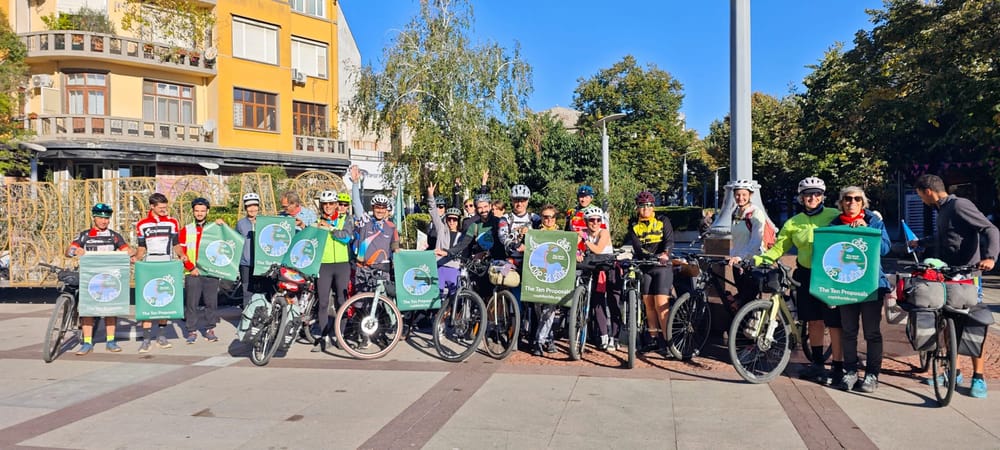
Burgas — 5 October 2026
Between cycling stages, we managed to squeeze in a few detours. Every one of them was worth the time.
Poda: A Stop Along Via Pontica
Just a few kilometres outside Burgas, we visited the Poda Nature Conservation Centre.
Despite its small size, Poda is exceptionally important for birds. It lies along Via Pontica, one of Europe's major bird migration routes, followed by millions of birds every year.
We were welcomed by Rado and the team from the Bulgarian Society for the Protection of Birds.
Although the visitor centre was undergoing renovation, they took the time to tell us about the area, its birdlife and the importance of coastal wetlands.
For a group of people crossing Europe on bicycles, hearing about birds that travel enormous distances between continents every year was particularly fascinating.
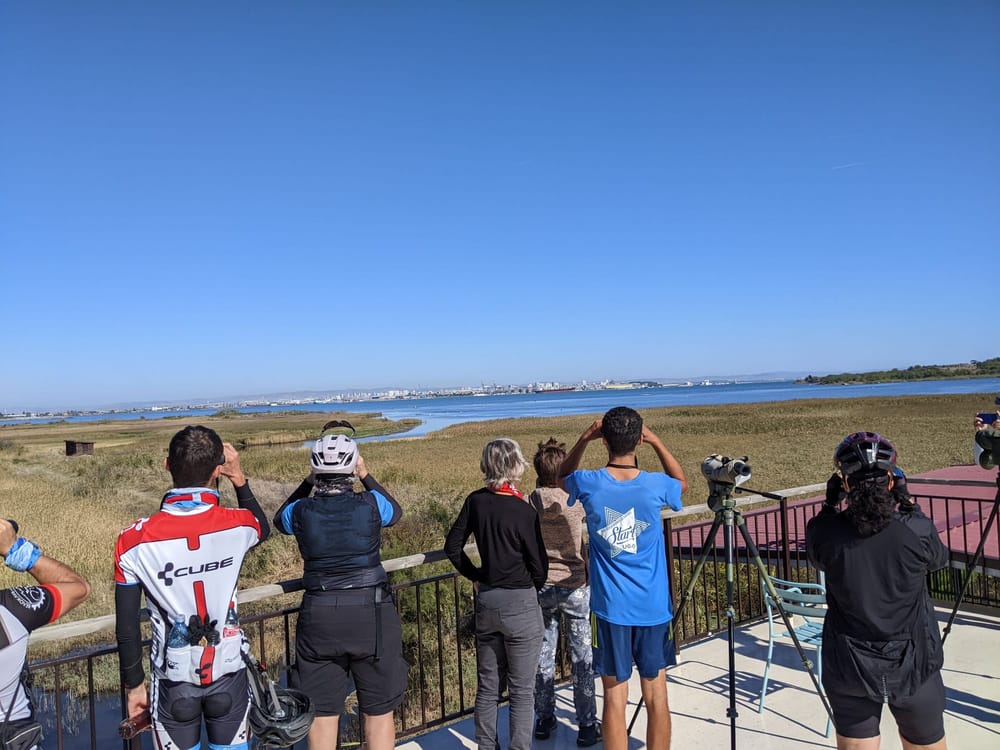
Poda Nature Conservation Centre, near Burgas — 5 October 2026
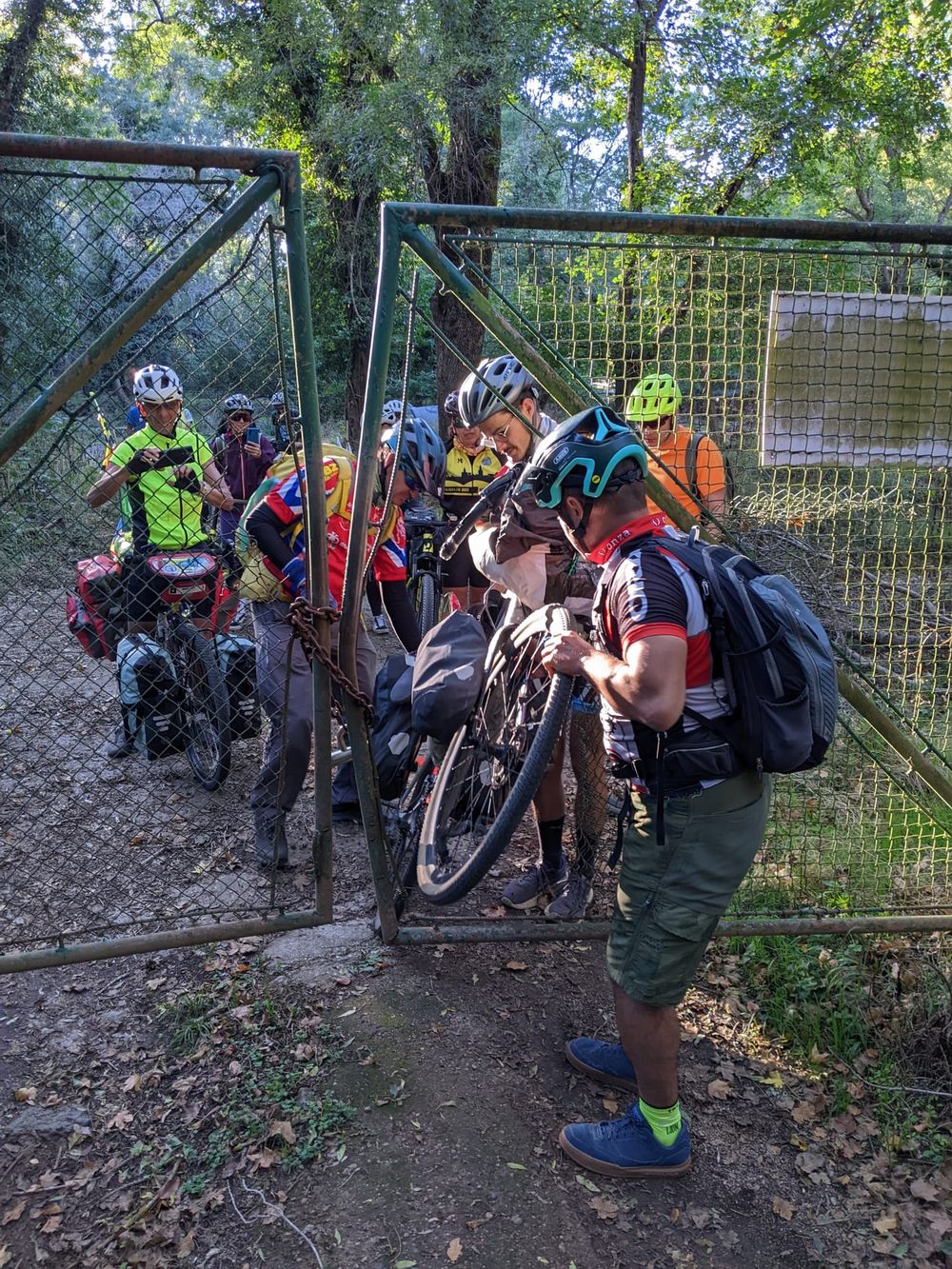
Begliktash: An Ancient Thracian Sanctuary in the Forest
Near Primorsko, we made another stop, this time at the ancient Thracian sanctuary of Begliktash.
Huge, unusually shaped rock formations rise among the trees. The site is associated with the beliefs and rituals of the ancient Thracians.
After days of cycling, organising and attending meetings, it was a pleasure to leave the bikes for a while and explore a place that tells a very different story about Bulgaria.
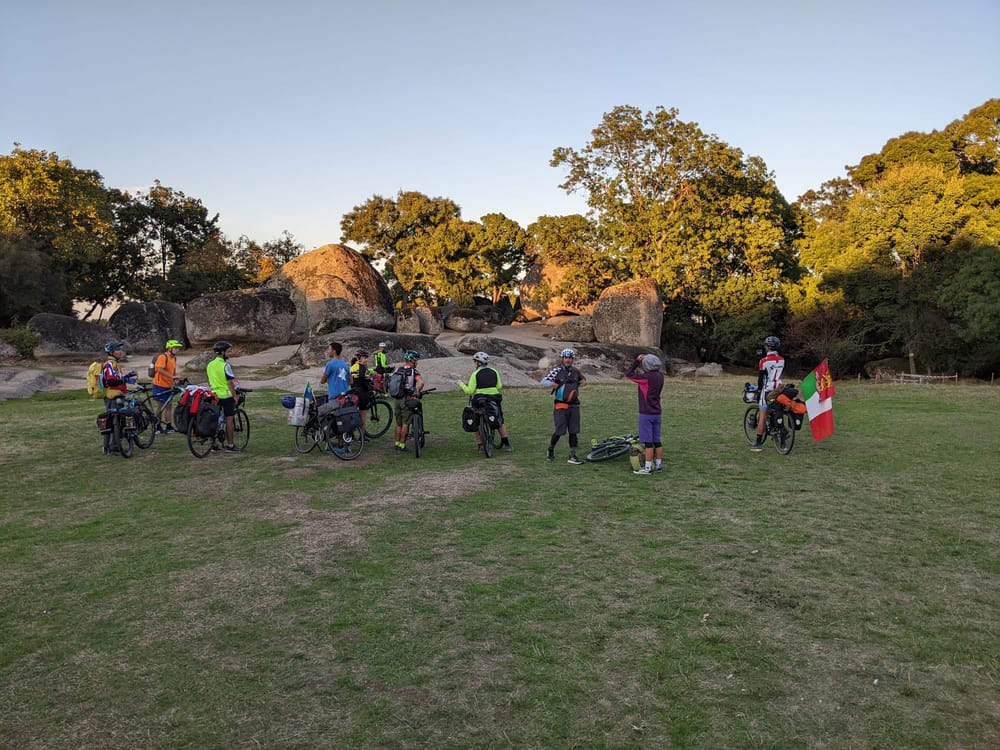
Begliktash Thracian Sanctuary, near Primorsko — 5 October 2026
Every long cycling journey has its food stories.
Ours included homemade banitsa, a traditional Bulgarian pastry filled with cheese.
Boyko took charge of preparing breakfast for the riders.
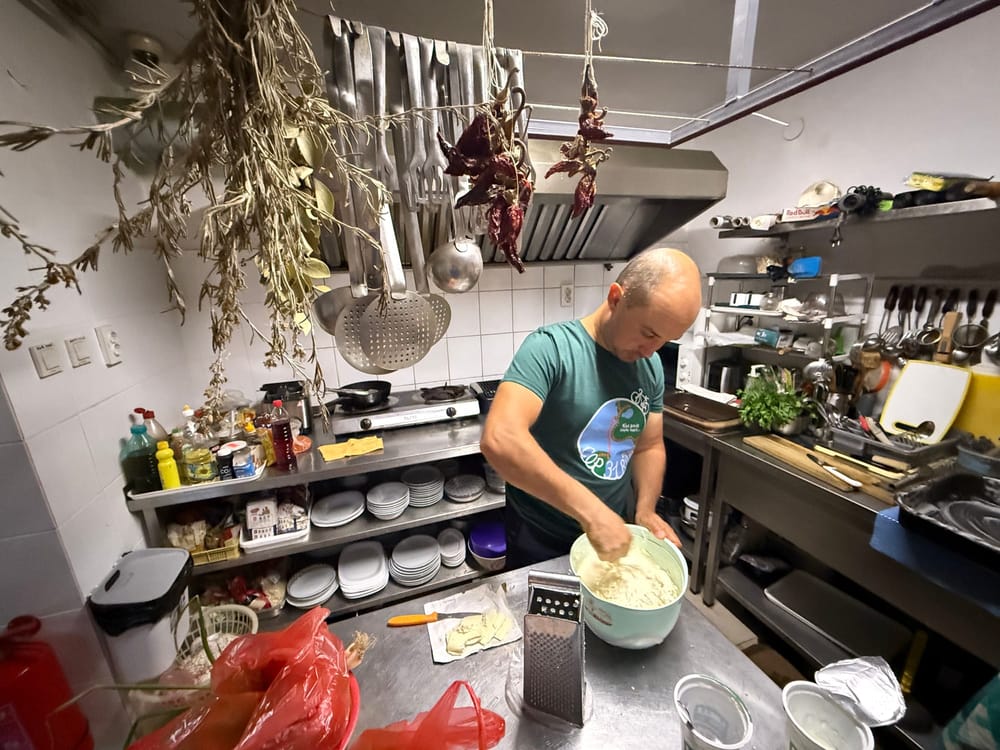 Boyko preparing traditional Bulgarian banitsa
There was tea, coffee, ayran,a yoghurt-based drink, and homemade banitsa. Everything needed for a good start to the day.
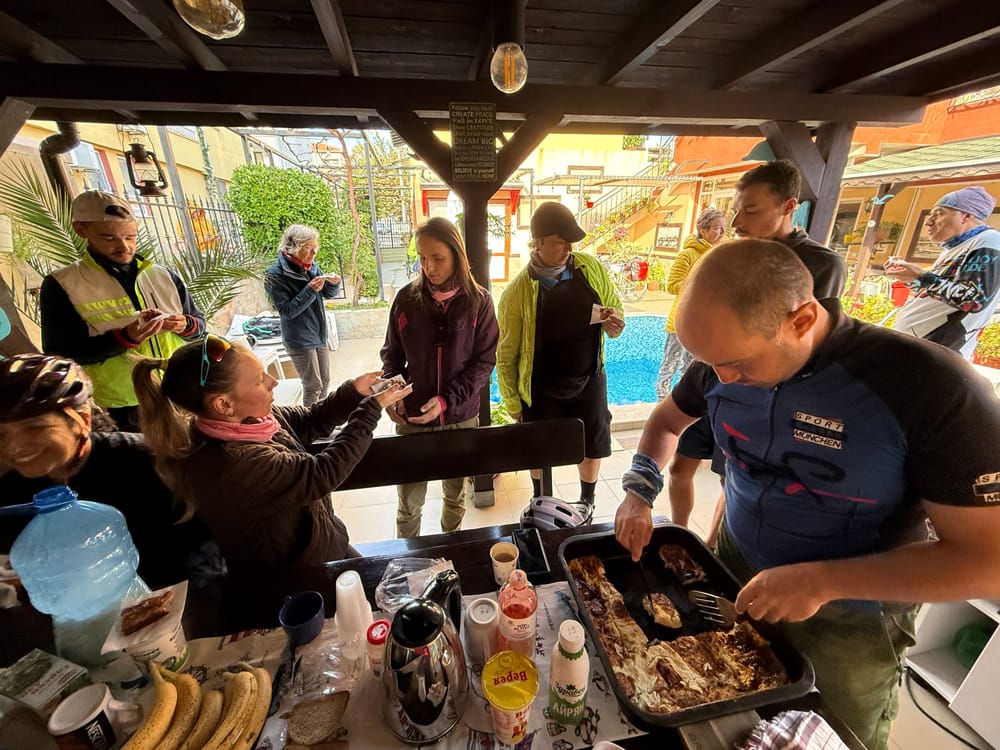
For our international friends, it was another taste of Bulgaria, this time not on the road, but around the breakfast table.
Strandzha: The Final Kilometres Across Bulgaria
Leaving the Black Sea coast behind, we headed into the Strandzha Mountains.
The region is home to Bulgaria's largest nature park and is one of the country's biodiversity hotspots.
Its forests are home to centuries-old oak, beech trees, and rare plant species that have survived since the Tertiary period. Among them are Strandzha oak and other relict species that make this region particularly special.
Cycling through Strandzha gave us a chance to show our international guests a different side of Bulgaria: small villages, forest roads and landscapes that have retained much of their natural character.
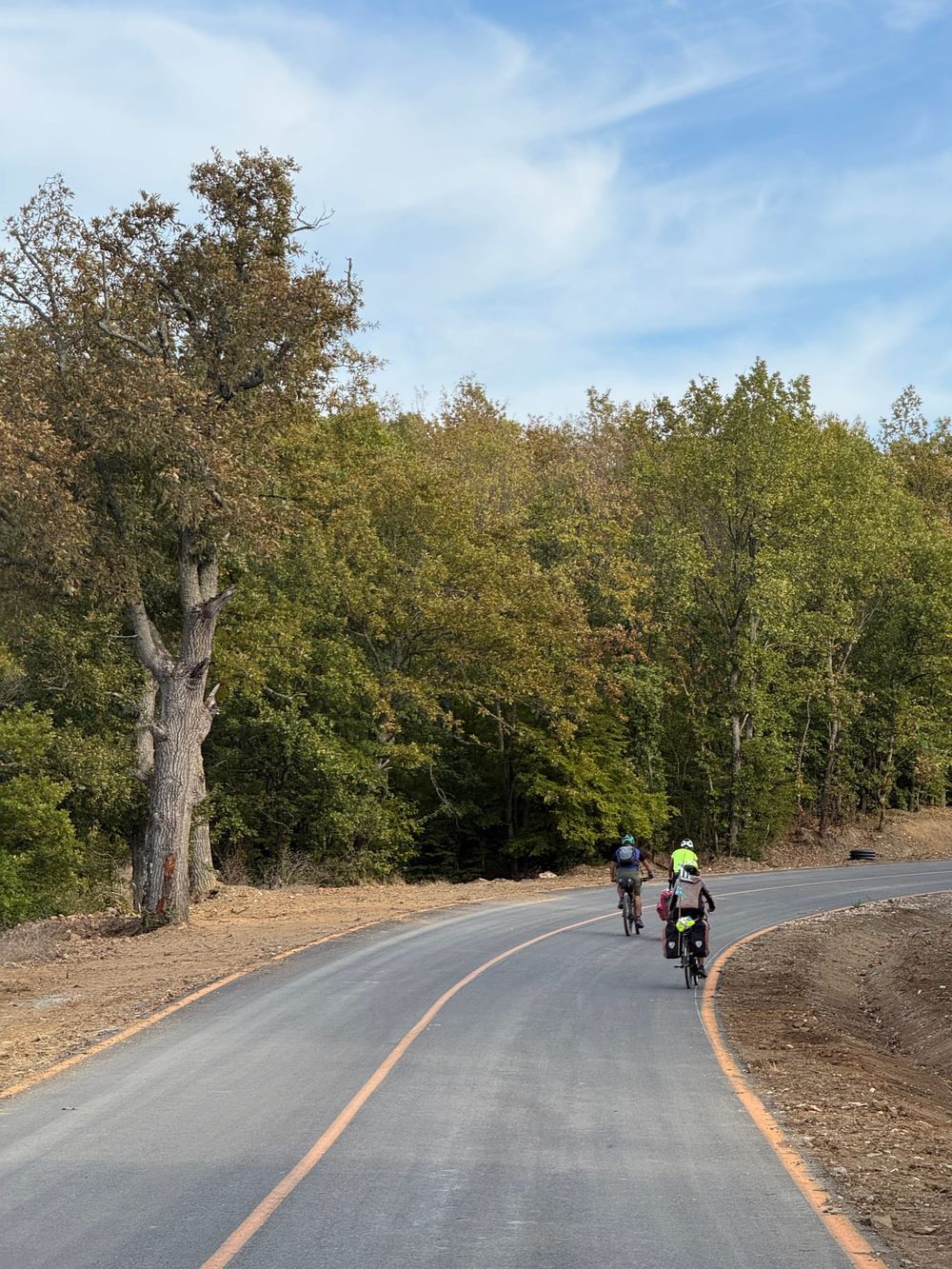
Cycling through the Strandzha mountains — 6 October 2026
Malko Tarnovo: A Conversation About an Important Road
Our final official meeting in Bulgaria took place in Malko Tarnovo.
This small town in the Strandzha mountains lies close to the Turkish border, along a route also used by long-distance cyclists travelling between Europe and Asia.
Here, Svetoslav and Boyko met Mayor Iliyan Yanchev and introduced him to the COP Bike Ride initiative.
One of the main discussion topics was the planned modernisation of the road between Burgas and Malko Tarnovo.
This is an important transport connection for local residents as well as cyclists travelling between Europe and Asia.
Bulgarian cycling organisations had already sent a letter to the responsible authorities, calling for the road design process to examine options that would make the route safer for cyclists too.
Decisions made during the planning stage could have an impact for years to come, while also helping to develop cycle tourism in Strandzha.
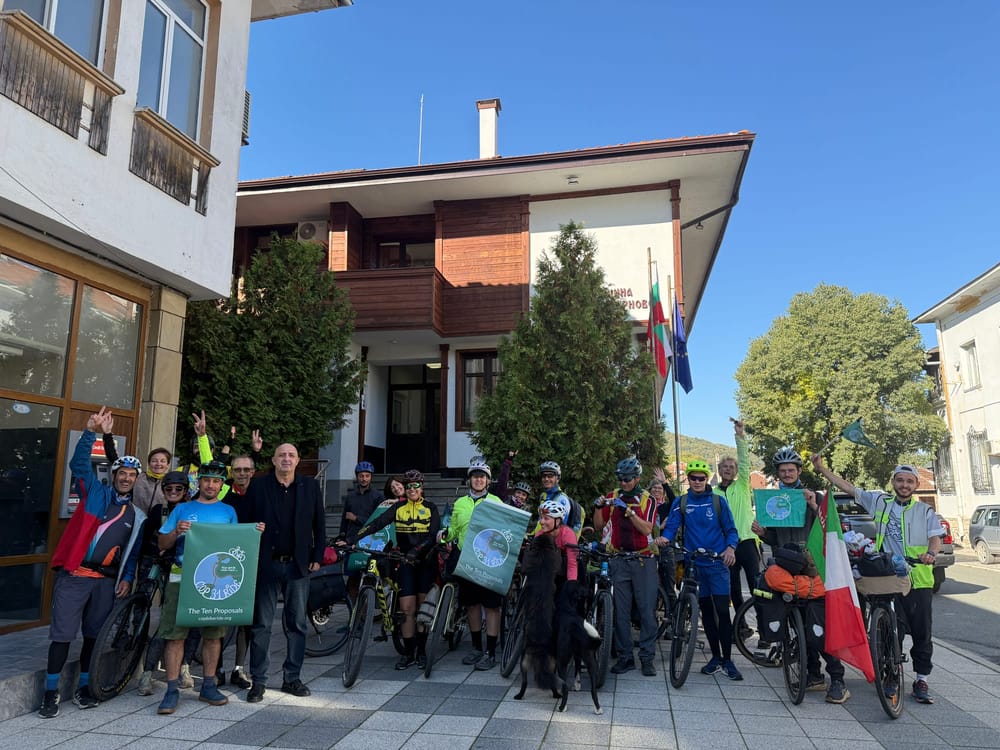 COP31 Bike Ride in Malko Tarnovo — 7 October 2026
At the Border Between Two Continents
The final kilometres took us to the Malko Tarnovo–Dereköy border crossing.
From here, the international relay continued into Türkiye and onwards towards Antalya.
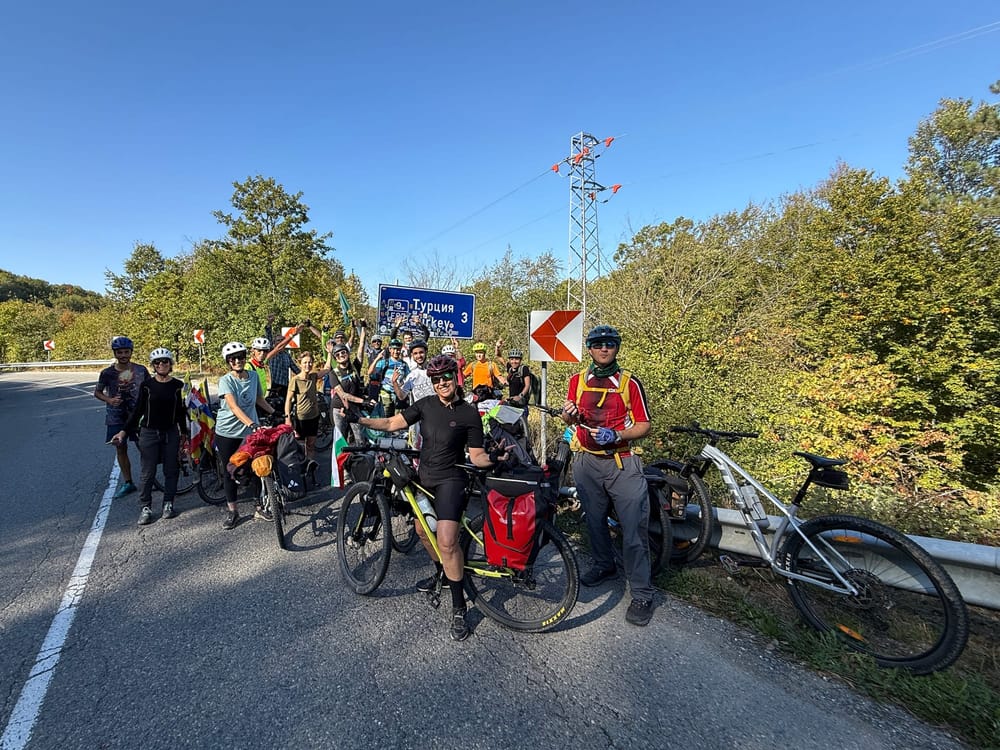
Three kilometres before the Malko Tarnovo–Dereköy border crossing — 7 October 2026
For some participants, the Bulgarian section was just a small part of a much longer journey. Others had joined us for a day or two, or even just a few kilometres.
But everyone became part of the story.
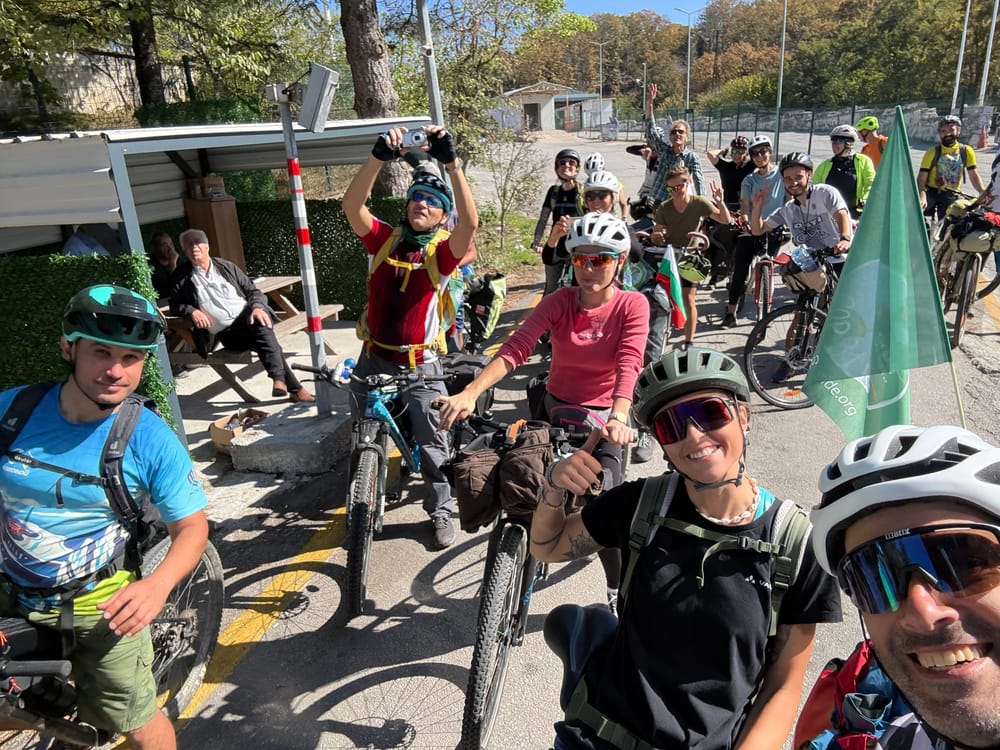
Malko Tarnovo–Dereköy border crossing — 7 October 2026
The People Who Made It All Possible
Behind every kilometre were people without whom this journey would never have happened.
Some cycled with us. Others organised events, welcomed participants, helped with logistics or showed us around their towns and cities.
A huge thank you to all the cycling and civil society organisations that supported us: VeloEvolution, Za Zemyata (Friends of the Earth Bulgaria), VeloKultura, Asenovgradski Bairi, Beroe Cycling Club, Ti Si Sliven, Karnobat Cycling Community, Bulgarian Biodiversity Foundation – Office Strandzha, Girls Who Bike Ride Burgas, Ustrem Cycling Club, Black Sea Route Association and Burgas Cycling Community.
We are also grateful to the municipalities of Plovdiv, Varna and Burgas for their support and cooperation.
Special thanks go to Bozhil, Boyko and Svetoslav for the time, effort and energy they put into organising everything. And, of course, to every cyclist who joined us along the way.
From the first kilometres outside Sofia Municipality to the Turkish border, we met people from different communities and discovered many sides of Bulgaria. We'll remember the beautiful landscapes, the conversations, the hospitality and the unexpected moments.
But what matters most is that these encounters gave us the opportunity to raise important questions, exchange ideas and build support for changes that go far beyond the journey itself.
Because what matters most about COP Bike Ride isn't how many kilometres we've covered, but what we leave behind.
VeloEvolution https://www.facebook.com/Veloevolucia
Za Zemyata (Friends of the Earth Bulgaria) https://www.facebook.com/ZaZemyata https://www.instagram.com/zazemiata
VeloKultura - https://www.facebook.com/veloculture https://www.instagram.com/velokultura/
Beroe Cycling Club https://www.facebook.com/Cycling.club.Beroe
Ti Si Sliven https://www.facebook.com/TisiSliven/ https://www.instagram.com/tisisliven/
Bulgarian Biodiversity Foundation – https://www.facebook.com/biodiversity.bg
https://www.instagram.com/lagoon_of_life/
Girls Who Bike Ride Burgas https://www.instagram.com/girlswhobike_burgas/
Ustrem Cycling Club - https://www.facebook.com/USTREM.CYCLING
Black Sea Route Association - https://www.facebook.com/blacksearoute
Burgas Cycling Community - https://www.facebook.com/burgascycling/
https://www.instagram.com/burgascycling/