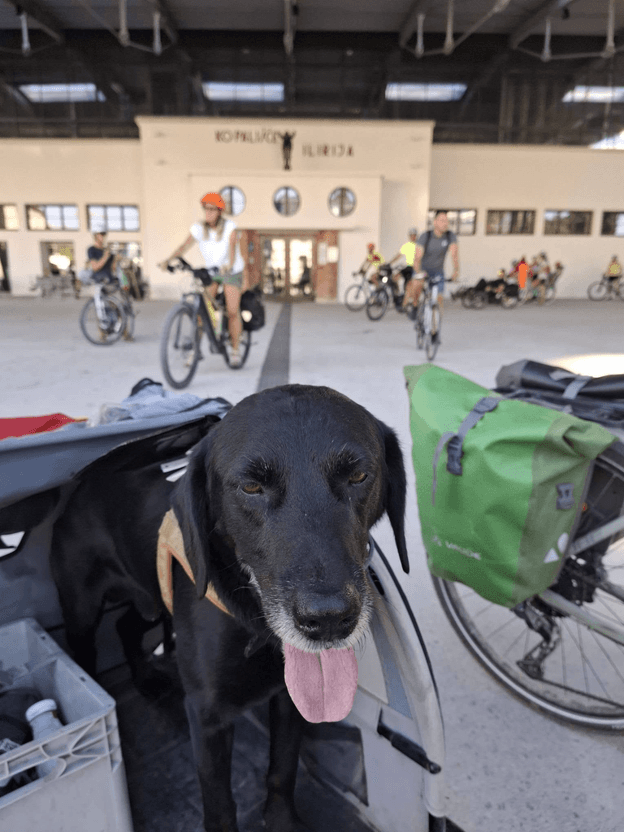
The cyclists crossed Slovenia between 6th and 10th of September. Around 100 people - from Slovenia, Italy, France, Austria, the Netherlands, and the United Kingdom - participated in the COP Bike Ride stretch in Slovenia.
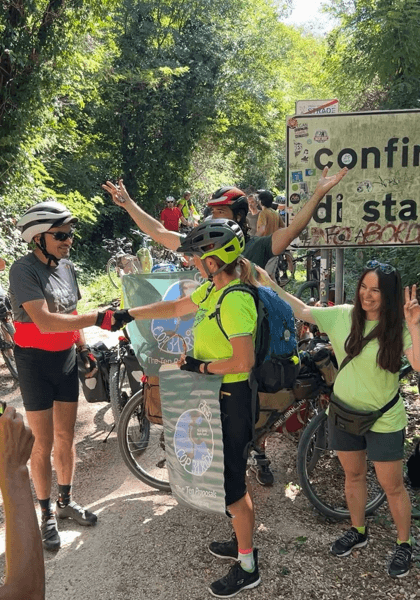
The local organization Bike Slovenija from Postojna took over the relay baton—in the form of the COP Bike Ride banner—,from Italian colleagues in Draga, on the border with Italy, and led it as far as Postojna. Here below, the passing of the banner from Italian to Slovenian cyclists in Draga, on the border with Slovenia
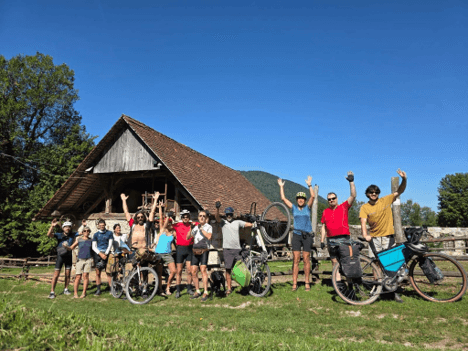
From there, the Ljubljana Cycling Network took charge of the relay and brought it all the way to Ljubljana on Monday 7th of September. On the way from Postojna to Ljubljana, 7 September:
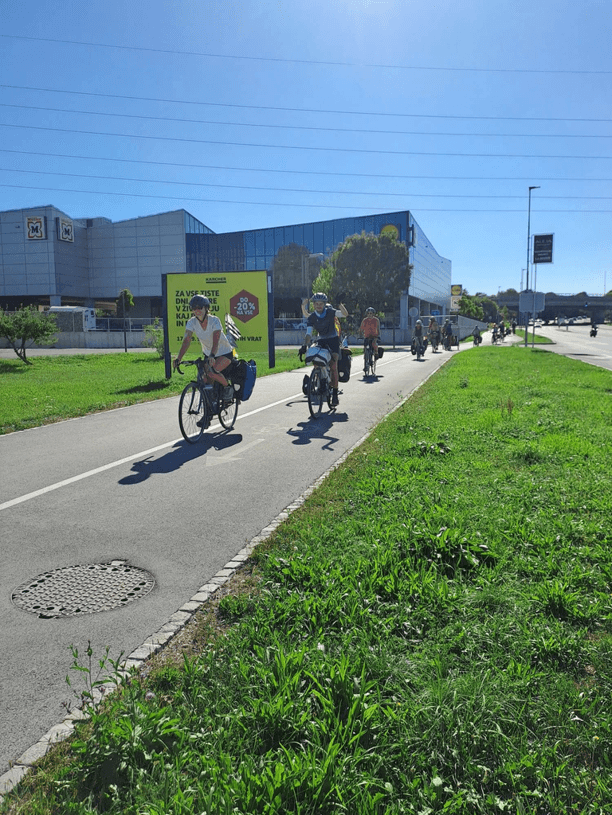
On 8th September, the Hamburg (Germany)- Villach (Austria) - Ljubljana (Slovenia) northern branch of the COP31 Bike Ride converged for its final pedalling strokes. Here below, cyclists arrived in Ljubljana:
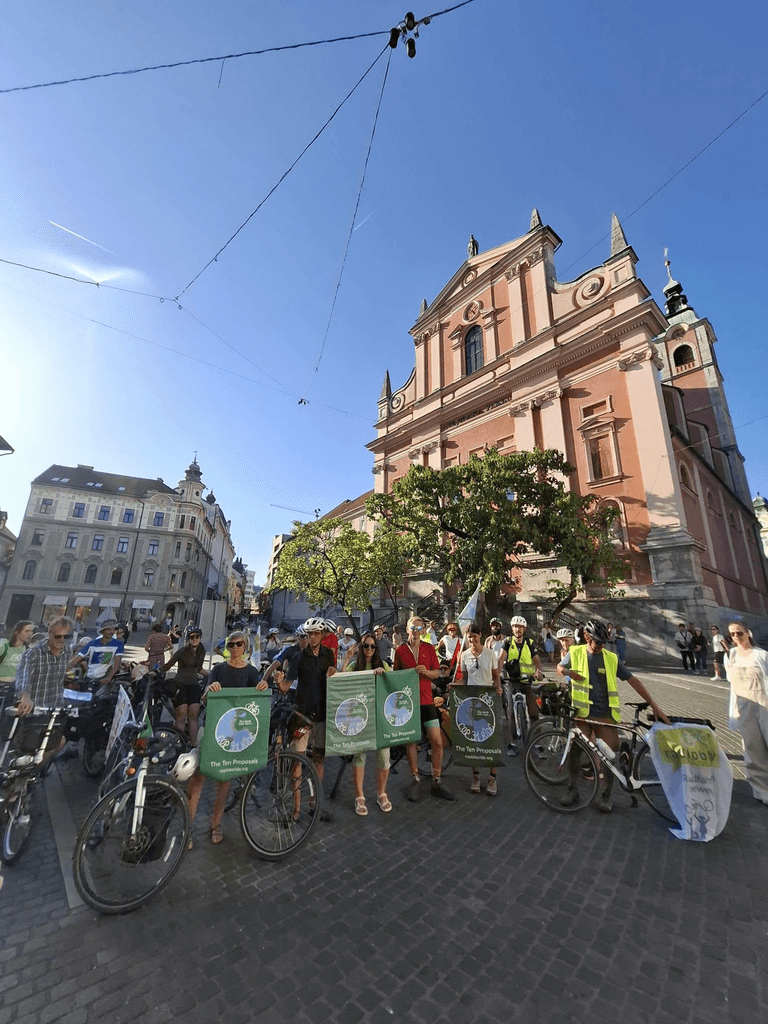
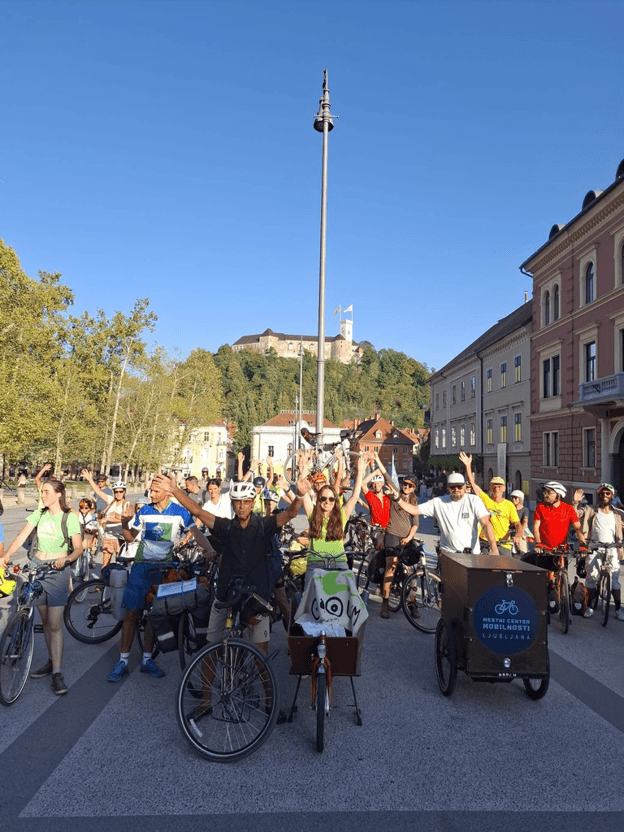
September 8th was a rest day in Ljubljana where an international "Critical Mass" event for Climate Justice was organized, featuring a group protest ride through the city and a cycling picnic at Trnovo Beach by the river Ljubljanica (Trnovska plaža). Here below the Critical Mass ride through Ljubljana stopping at the Congress Square, which used to be a big parking spot:
While last year’s relay saw a total of around 1,200 participants, this year the number of participants reaching Slovenia has already exceeded 1,600. In total, there were more than 60 international participants, with the largest group arriving in Slovenia from Trieste. There were also over 40 participants from Slovenia at the whole event.
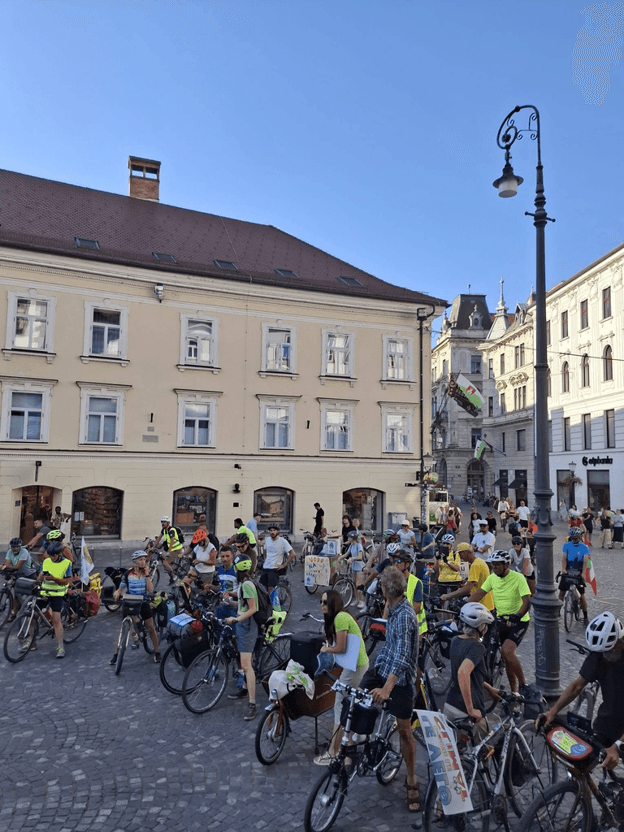
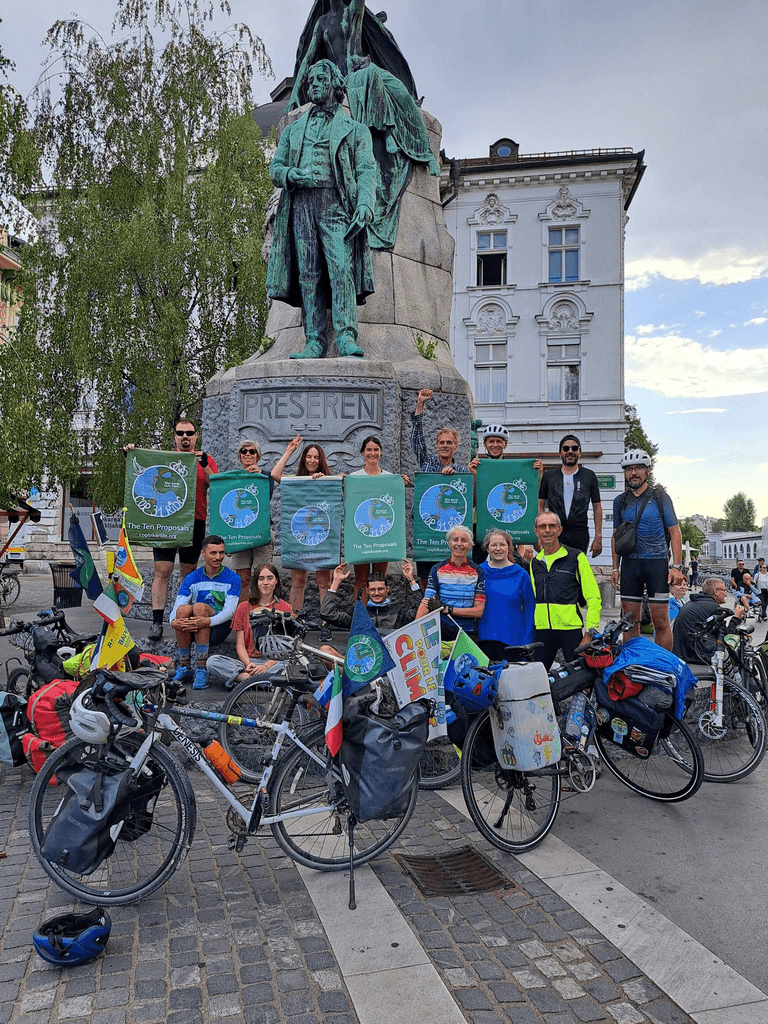
In addition, the bearers of 6 additional banners converged in Ljubljana on 8th of Sept, building into a “super” convergence of six COP31 Bike Ride banners. The primary banner originated in the departure city of Belém, while the others came from Bilbao, Pointe du Raz, Bordeaux, and London. This year’s global cycling relay consists of eleven branches in total. Throughout the entire journey, ambassadors cycle while carrying these banners toward the final destination: Antalya.
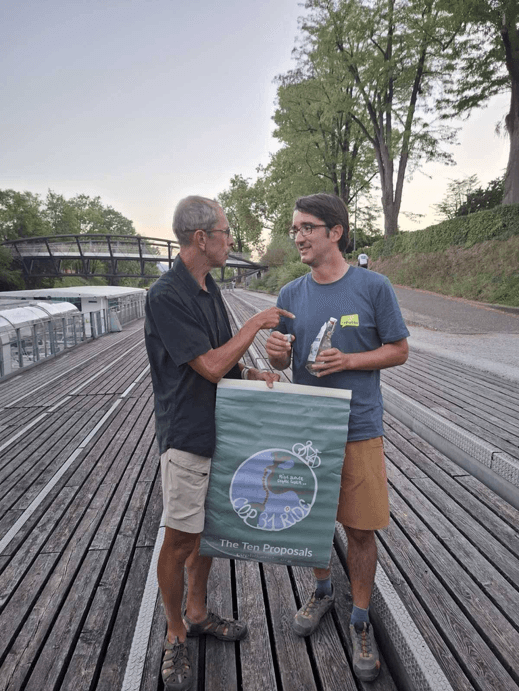
Members of the Austrian cycling advocacy organization Radloby—coordinators of the Austrian leg of the journey, which ran from Linz to Ljubljana—brought with them a bottle of water from a vanishing glacier near the Carinthian Alpine village of Mallnitz as a symbol of climate change. Meanwhile, the Triglav Glacier in Slovenia disappeared completely this October.
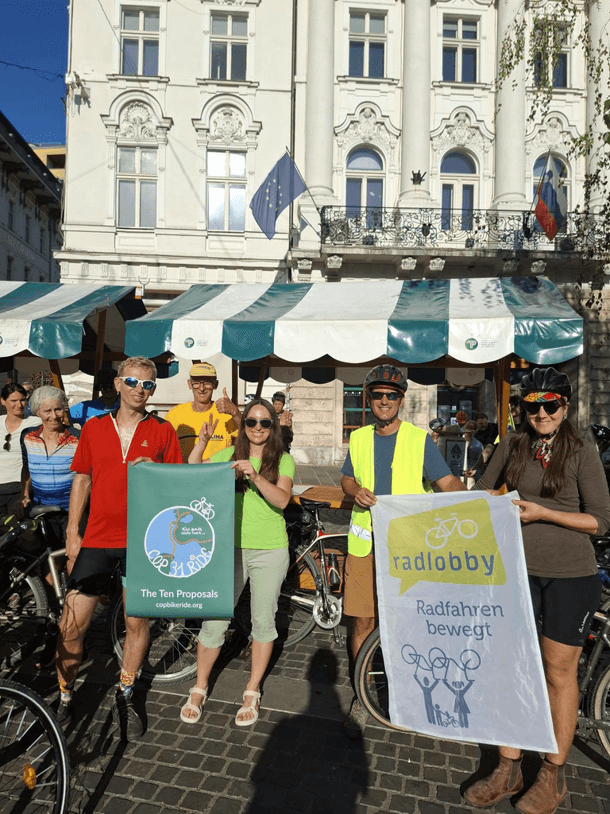
Here below Christoph Zettinig from Radlobby Kaernten hands over a bottle of water from a vanishing glacier near the Carinthian Alpine village of Mallnitz that will be carried to Turkey by one of the COP31 Bike Ride ambassadors, Christophe Bonneau, who has been traveling all the way from Portugal.
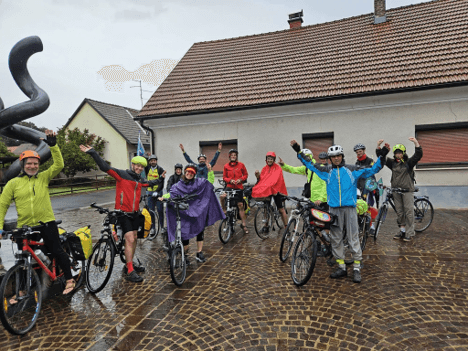
On Wednesday, September 9, the relay—led by the Ljubljana Cycling Network—set off for Novo mesto, facing poor weather.
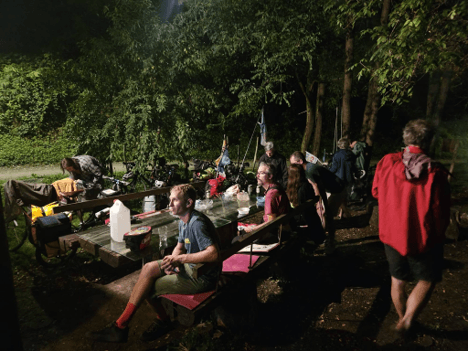
Upon arrival, the relay was handed over to a local activist Natalija Zanoški from the association Est-etika. At the well-known Novo mesto spot, Pumpnca, we watched a documentary, engaged in discussions, and socialized with the locals. Watching the documentary and socialising:
The following day, before departing for Zagreb, we handed over the cycling proposals to the deputy mayor of city of Novo mesto, Sara Tomšič (third on the left).
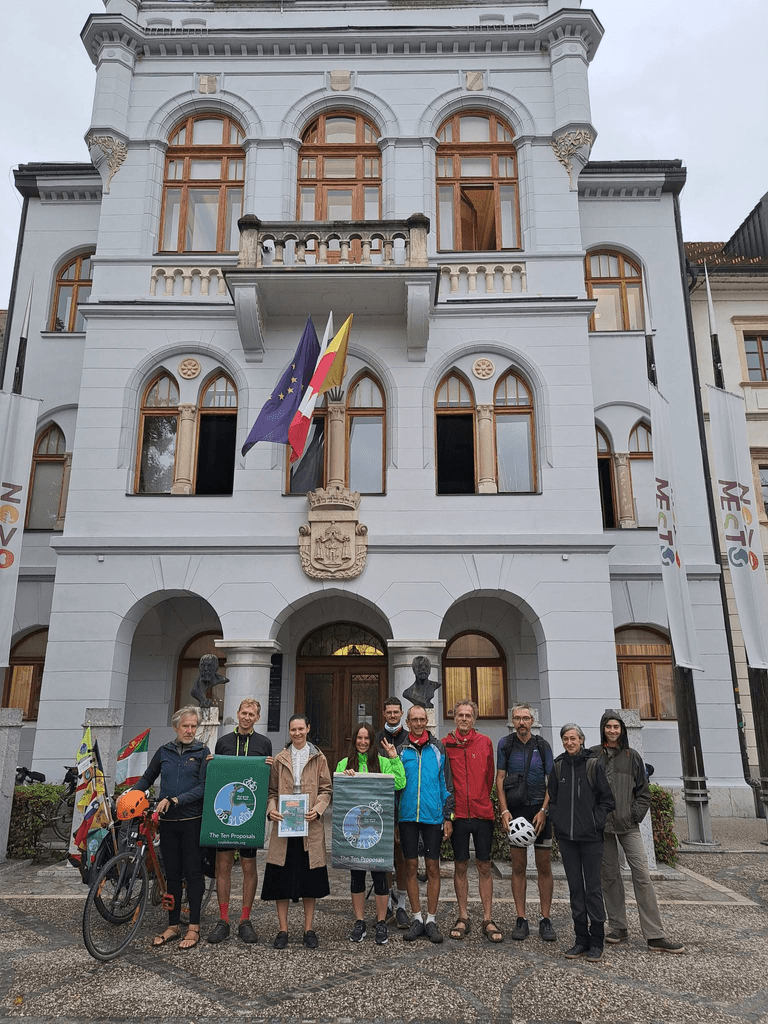
At its various stops, the cycling relay engaged with local communities, presented the initiative and specific cycling proposals, and encouraged decision-makers to sign at least three commitments aimed at improving cycling policies and conditions.
Through both in-person and electronic channels, we collected letters of commitment from four Slovenian municipalities—Nova Gorica, Novo mesto, Ljubljana, and Hrastnik—as well as a letter of commitment from the Zasavje Regional Development Agency.
Here below a meeting in September during the European mobility week in Nova Gorica between the deputy mayor of Nova Gorica - Marko Tribušon - and Iva Zozolly, the COP31 Bike Ride coordinator for Slovenia and project manager at LKM (Ljubljanska kolesarska mreža, the Association for Encouragement of Cycling and Sustainable Mobility), handing over the 10 proposals :
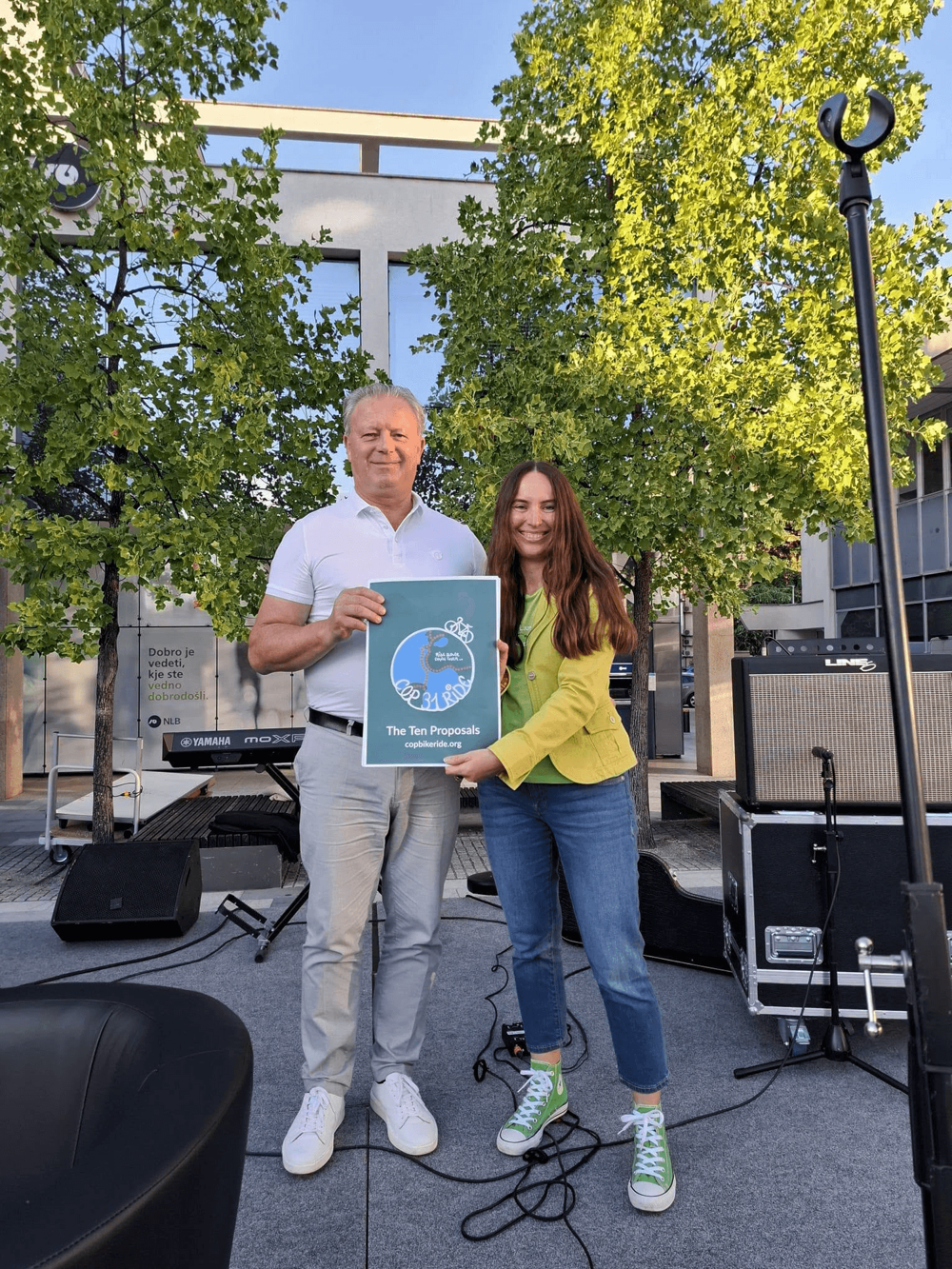
In addition to cycling, events for the general public were held, along with screenings of the documentary “Together”, about the COP30 Bike Ride, followed by discussions with COP bike riders from Slovenia, Italy, France, and the United Kingdom regarding the initiative’s themes, as well as the dilemmas and questions facing this growing movement.
Rainy weather accompanied us the following day as well, on the way to Zagreb. At the Bregana, border with Croatia, we handed over the banner to Croatian cycling activists from the Zagreb-based “Sindikat biciklista” (Cyclists' Union with whom we continued the journey to Zagreb.
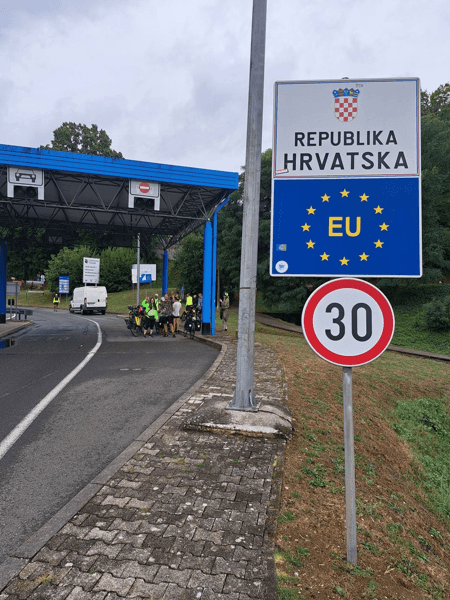
A final word from Iva Zozolly, the COP31 Bike Ride coordinator for Slovenia and project manager at LKM (Ljubljanska kolesarska mreža, the Association for Encouragement of Cycling and Sustainable Mobility):
"We cycled because we advocate for fair and effective climate policies; because we support sustainable mobility, and we want cities that are green, socially just, safe, and accessible; and because we want future generations to inherit a planet that is fit for life.
Due to its specific geographical characteristics, Slovenia is warming faster than the global average. To date, the average temperature in Slovenia has risen by approximately 2.2 degrees Celsius compared to the pre-industrial era. This year, we experienced the impact firsthand as new summer temperature records were set—with August temperatures exceeding the average of the last twenty years by 4.5 degrees Celsius.
Slovenia ranks among the highest in the European Union regarding pollution from motorized transport. Passenger car emissions account for two-thirds of all transport-related emissions in Slovenia. Analyses of travel habits in Slovenia show that even trips shorter than 2.5 kilometers are most frequently made by car. The same applies to trips shorter than five kilometers—a distance easily covered by bicycle. The quality of cycling conditions is determined by how well they cater to the most vulnerable cyclists (the elderly, people with disabilities, and children). International experience demonstrates that a cycling system designed to be safe, comfortable, and accessible for vulnerable groups is well-suited for the entire population—including younger and future generations, whom we wish to encourage to cycle, especially in the context of climate change. Analyses indicate that, in cities, carbon neutrality in transport could be achieved by 2030 simply by using existing technologies—namely, the electrification of public transport and logistics, along with increased cycling.
It is imperative to strive for fair, effective, and bold climate policies—at both the global and local levels. Promoting everyday urban cycling is a key part of this effort. This would replace urban car trips and reduce greenhouse gas emissions. Increased cycling also leads to a reduction in traffic congestion, pollution, emissions, noise, and the loss of biodiversity. Cycling contributes not only to the health and well-being of individuals but also to that of the community and the environment".
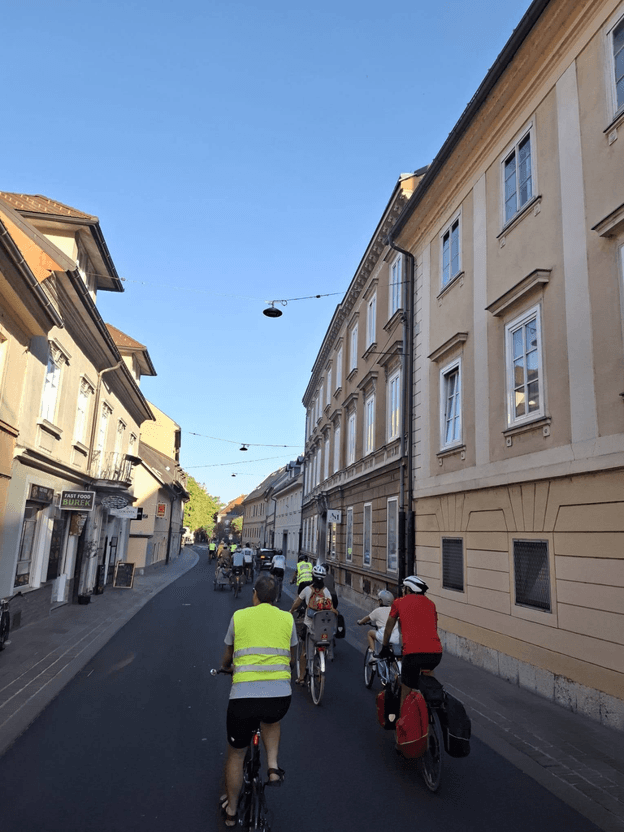
And finally, many thanks to the following individuals and organisations that made the ride possible in Slovenia:
The Ljubljana Cycling Network (Ljubljanska kolesarska mreža) served as the overall national coordinator for the initiative in Slovenia and as the country’s representative in the global COP 31 Bike Ride campaign.
The Slovenian leg was carried out with the support of numerous volunteers, local communities, municipalities, associations, and cycling networks. The section through the Primorska region—from the Italian border to Postojna—was coordinated by the organization Bike Slovenija; the segment from Postojna to Ljubljana and onward to Novo mesto was coordinated by the Ljubljana Cycling Network; and the final stretch from Novo mesto to the Croatian border was coordinated by the association Est-etika (društvo Est-etika) and the Zora Institute (Zavod Zora).
More video highlights on the LKM Instagram profile
Photos: archive of Ljubljanska kolesarska mreža and Nermin Fetić.